
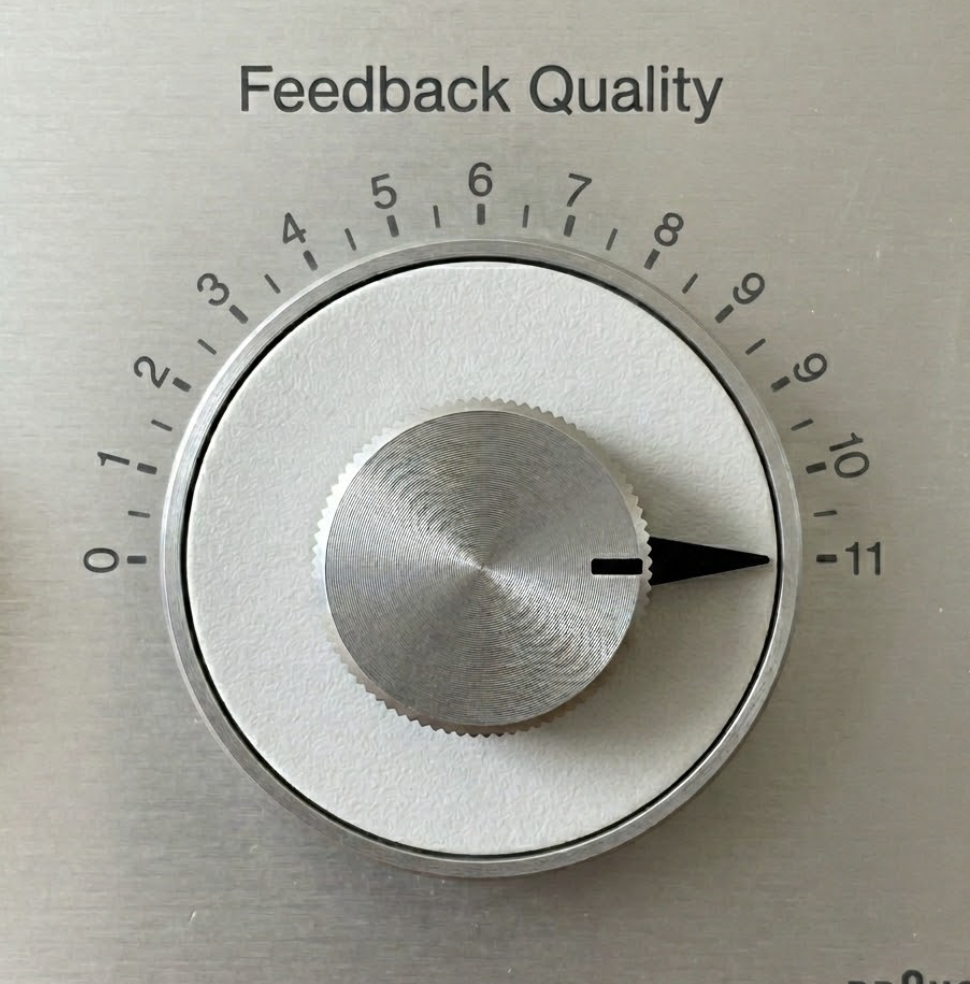
The problem isn’t the students—it’s the structure. Students can be benefit from simple, structured feedback protocol—adapted for design education—that transforms vague peer comments into actionable design critique. By moving away from informal "chats" and toward a disciplined routine, we can turn feedback into a high-leverage tool for iteration and inquiry, while also developing the skills to evaluate and collaborate.
Read MoreUsing AI tools with students to support their design inquiries
Over the past year I have been exploring how to use AI in the planning and delivery of design inquiries. These tools have opened up new opportunities and workflows, both for me and my students. I started by using AI tools to support the delivery of content to learners by providing differentiated background text and resources.
Recently my students and I have been exploring ways of using AI as a research assistant, critical friend, or colleague. This has lots of potential in the design inquiry process. Students can use chat bots such as ChatGTP, Poe, or Perplexity to inquire into, jumpstart, or scaffold various steps of a design inquiry. This might look like:
Asking AI to suggest possible design constraints to context;
Having a conversation with a fictional user, expert, or secondary user in order to uncover needs or new perspectives
Asking the AI to suggest possible research directions for further exploration;
Asking the AI to suggest possible considerations or possibilities for a design solution.
The links above link to chats with ChatGTP and Perplexity, where you can see how a conversation develops.
Below is an example of a scaffold we are using with students to guide them in the creation of a persona in an Large Language Model AI such as ChatGTP.

As we have navigated this, we are coming to see the importance of user research to help frame and guide the AI. This powerful technology can swiftly offer generic persona templates, but creating a meaningful persona demands a foundation rooted in research. As such its important to guide students through a process that includes face-to-face interactions, observations, and interviews. These steps are vital for developing a nuanced understanding of user needs and fostering empathy, a cornerstone of human-centered design. The AI offers a way to consolidate, summarize, or present different perspectives - but it is not a substitute.
Below is an example of the kind of resource that we are working through with students.
I’ve shared more of these explorations and strategies on my Design and Inquiry site for design educators and students.
It is crucial for educators to recognize that the outputs of AI models represent nuanced interpretations influenced by the underlying training data. Therefore, critical thinking plays a pivotal role in equipping students with the capacity to formulate insightful inquiries during the design phase. This intellectual rigor prompts students, under the guidance of educators, to question assumptions, discern potential biases, and scrutinize the model's operations. Through emphasizing these analytical skills, students are empowered to move beyond surface-level acceptance of AI-generated results, fostering a mindset oriented towards depth, precision, and nuanced understanding.

Using AI to support language learners
Being able to access content and context of a design opportunity is essential for a successful design inquiry. Design inquiries are more process than content driven, requiring students to draw upon their background knowledge and prior experiences, as well as understand the nuances of the design opportunity. As the majority of learners in our program are English language learners (ELLs), accessing this knowledge and experience.
Read MoreUnpacking Key and Related Concepts in MYP Design
Concepts are what drive our MYP Design curriculum. They establish the conceptual framework in which the teaching and learning takes place. MYP Design units of inquiry must be organized around one of four Key Concepts (KC): Communication, Communities, Development, and Systems; and one or two related concepts. Using this combination, MYP design educators explore and develop some of the conceptual understandings for the unit.
We’ve been looking deeply at the key and related concepts in MYP design and considering how they are connected, and how we might unpack them for students. As part of this process, we identified connections between the concept and the MYP Design Cycle objectives. For example, the concept “communication” has direct connections to how designers communicate with clients and themselves.
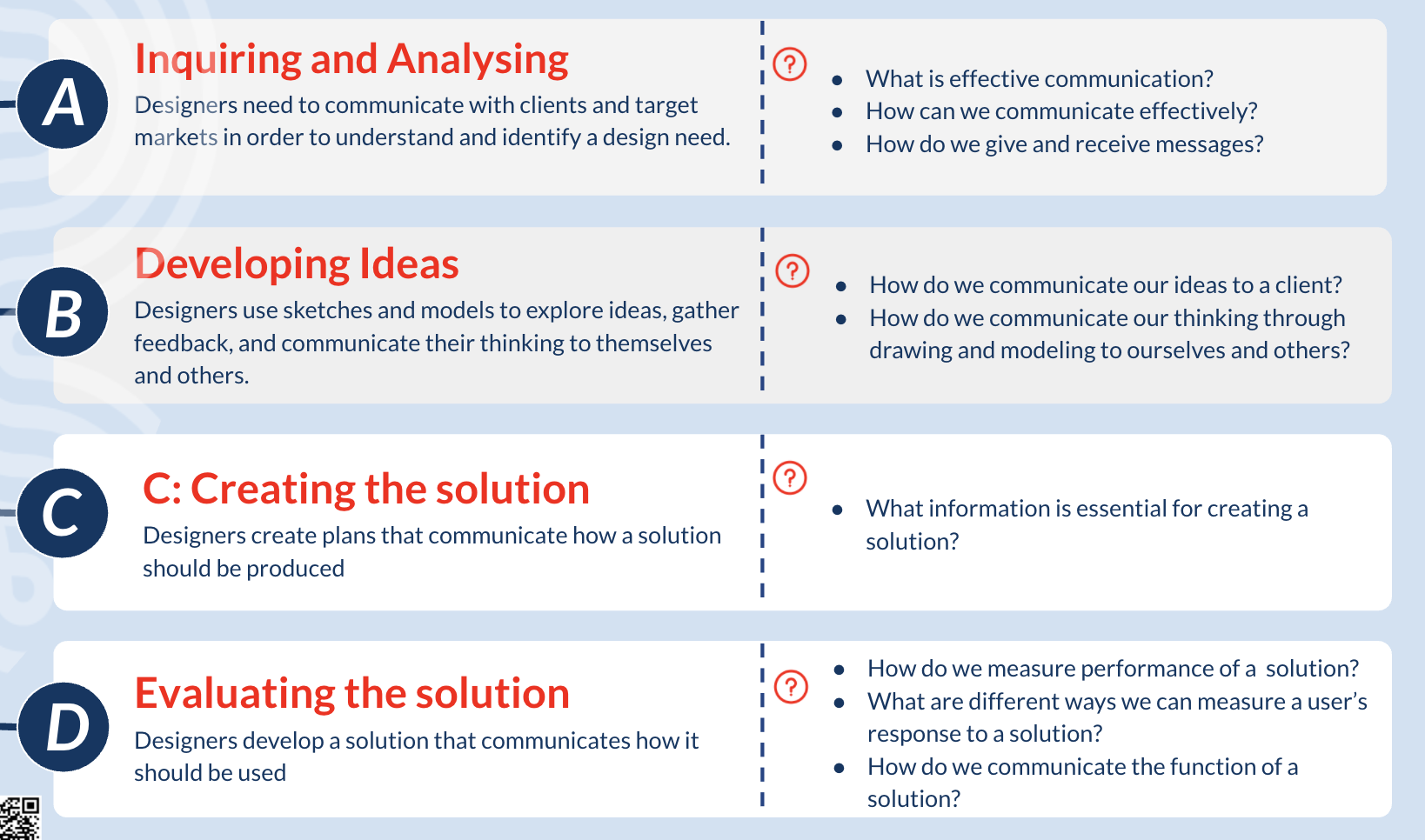
Mapping the key concept communication to the MYP Design Cycle criterion.
To be honest, this was the first time we looked for connections between the key concept and the design cycle and it was hugely informative. We were able to make several strong connections and also generate some guiding questions about the role of these concepts in different parts of the design cycle. This has given us a different perspective on how these key concepts relate to the cycle, and also ways in which we can incorporate them into the teaching and learning experiences.
We took a similar approach in looking at the related concepts. These are the key drivers of the inquiry questions, so we looked at how they might connect with the three categories: Factual, Conceptual, and Debatable.
Many of the connections between these concepts and the inquiry questions were informed by conceptual understandings from the DP Design curriculum.
Below is the whole set. They can be downloaded as a PDF and used under a Creative Commons license.

Revisiting GRASPS: a model for project based learning
A while ago we started using GRASPS models to develop our units in MYP and DP design. I wrote about our initial work with this model a few years ago. Since then, we have used it to develop all our units in design and have noticed some meaningful results and benefits for both students and teachers.
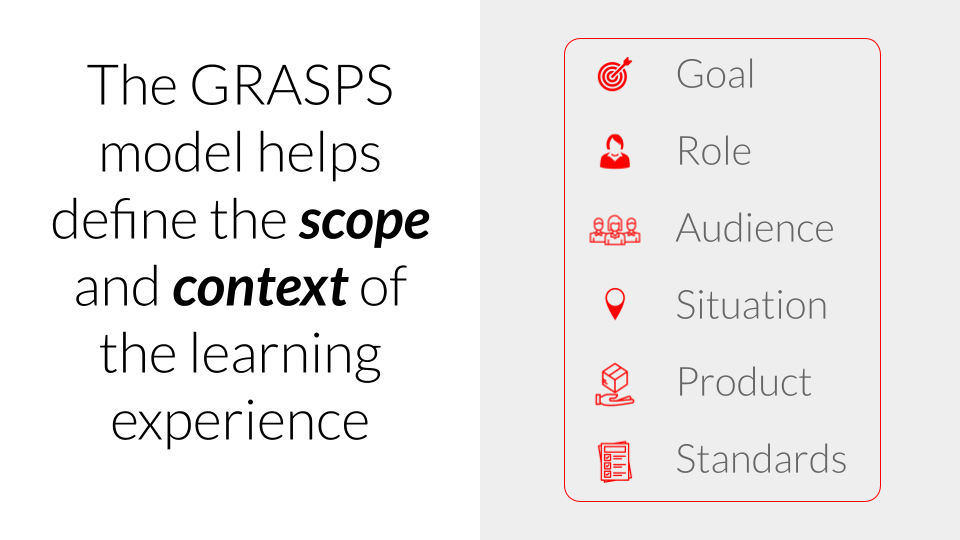
What is GRASPS?
GRASPS is a model for demonstrating performance of understanding using authentic assessments. It is one of many performance of understanding models, but is ideally suited to the kind of project-based inquiries we do in design. GRASPS represent a framework for organizing, delivering, and assessing a project-based assessment. The assessment associated with the inquiry is structured around the following expectations and goals.
Goal: A definition of the problem or goal
Role: Define the role of the student
Audience: Identify the target audience
Situation: This is the context or scenario of the goal
Product: What is created and why it will be created
Standards: Rubrics or success criteria
Benefits of GRASPS
Over the years of organizing and implementing our units this way, we have noticed some benefits for students and teachers. Many of these observations are from the perspective of an MYP or DP classroom, but the underlying ideas would benefit any project-based learning experience.
From the teacher’s perspective, we have noticed:
Develop authentic learning experiences: The overall GRASPS structure allows us to identify more authentic learning experiences that drive our units of inquiry.
Clearer presentation of the purpose and content of a project-based inquiry: Because of the way a GRASPS inquiry is framed, communication of the goals, content, and purpose of the inquiry is clearer. During planning it is easier for teachers to plan and develop more authentic units. This has become particularly important for collaboration between teachers, as most our units are planned to be taught by several people.
Clarify the roles, perspectives, and responsibilities of students: The GRASPS model clarifies these aspects of the inquiry. Teachers can choose resources, learning experiences, and content to support the students’ development in these areas. In particular, the Role has become an important part of how we frame units to students (see below)
Communicate the expectations of the inquiry: The structure allows for clear communication of the rubric, assessment expectations, as well as the approaches to learning that students need to utilize to be successful. This has been particularly important in recent times when some of our teaching and learning has shifted to remote
Guide the selection of learning experiences, content and skills necessary for success: Through planning a unit around the GRASPS framework, teachers can think critically and creatively about the type of learning experiences that are needed to support the inquiry. We have started to look more broadly at the skills that re needed, with a particular focus on the Approaches to Learning (ATLs).
New understandings about GRASPS
Since employing GRASPS to guide our unit development, we have come to some understandings about aspects of the model that helping us strengthen the delivery of our units.
Role
In the past, we often defined the role of the student in a very brief way - almost like a job title. You will be a a designer, engineer, marketer, etc. However we found that this often relied on student’s assumptions of what the role is. The role is very important as it defines the perspective from which the student approaches the task.
Now, we spend some time considering the role of the student in this inquiry, the skills they need, and how this role is closely connected to the Goal, Audience, and Product. For example, in a unit that defines the role as a design researcher, we spend time in class unpacking what this role entails, and how it connected to the goal, audience, and product. We discuss and highlight the skills, perspectives, and approaches that a person in this role might need to draw upon in order to be successful.
Some questions we ask in the planning stages to help us better identify and describe the role include:
What are some authentic roles that are related to the goal or discipline?
How will students understand the scope and expectations of the role?
What prior knowledge about the role will students have?
What skills and knowledge will students need to be successful in this role?
Is there a role model that students can refer to or meet in person?
Audience
The audience provides much context to the inquiry. To this end, the audience helps teachers identify, organize, and prioritize the content and skills that students need in order to meet the needs of the audience. This goes beyond just satisfying the immediate needs of the audience, but also includes understanding the audience from a user-centered design perspective and empathizing with their needs in order to develop a more successful design solution. We’ve started to use User-Task-Environment analysis as part of the research approach. In Design, this approach also supports our research goals, and helps students think more broadly about the problem.
Some guiding questions we ask include:
What is the relationship between the audience and the role?
What are the defining characteristics of the audience, and how might these influence the skills and knowledge needed by students to be successful?
Developing stronger GRASPS assessments
To support teachers I’ve created a guide to developing a GRASPS assessment and incorporating into MYP and DP units of inquiry.
Teardown analysis
Inspiration

Source: Things Come Apart, Todd Mclellan
A few years ago I came across photographer Todd Mclellan’s book Things Come Apart, a beautiful visual reflection on the objects around us. His photographs of a disassembled computer, bicycle, typewriter, and according show the intricacy and complexity of the objects. This book inspired me to develop a unit of inquiry around disassembly and exploration of objects, which provides an opportunity for students to think critically about how design decisions of materials and processes impact sustainability.
Concepts
Prior to the activity, students reviewed and explored DP Design Technology content areas such as:
Resources and Reserves and how these impact the material choice and sustainability
Energy utilization and storage and how a product uses energy impacts design choices and how and why batteries may be used
Waste mitigation strategies and these can guide designers into optimizing the sustainability of a product
Design for manufacturing (DfM) and how various strategies such as Design for Assembly (DfA) and Design for Disassembly (DfD) can be utilized by designers to guide the materials, and processes used in producing a design.
Life Cycle Analysis (LCA) as a tool used by designers to assess the impact of a design on sustainability.
Right to Repair principles were examined and discussed.
Taking things apart
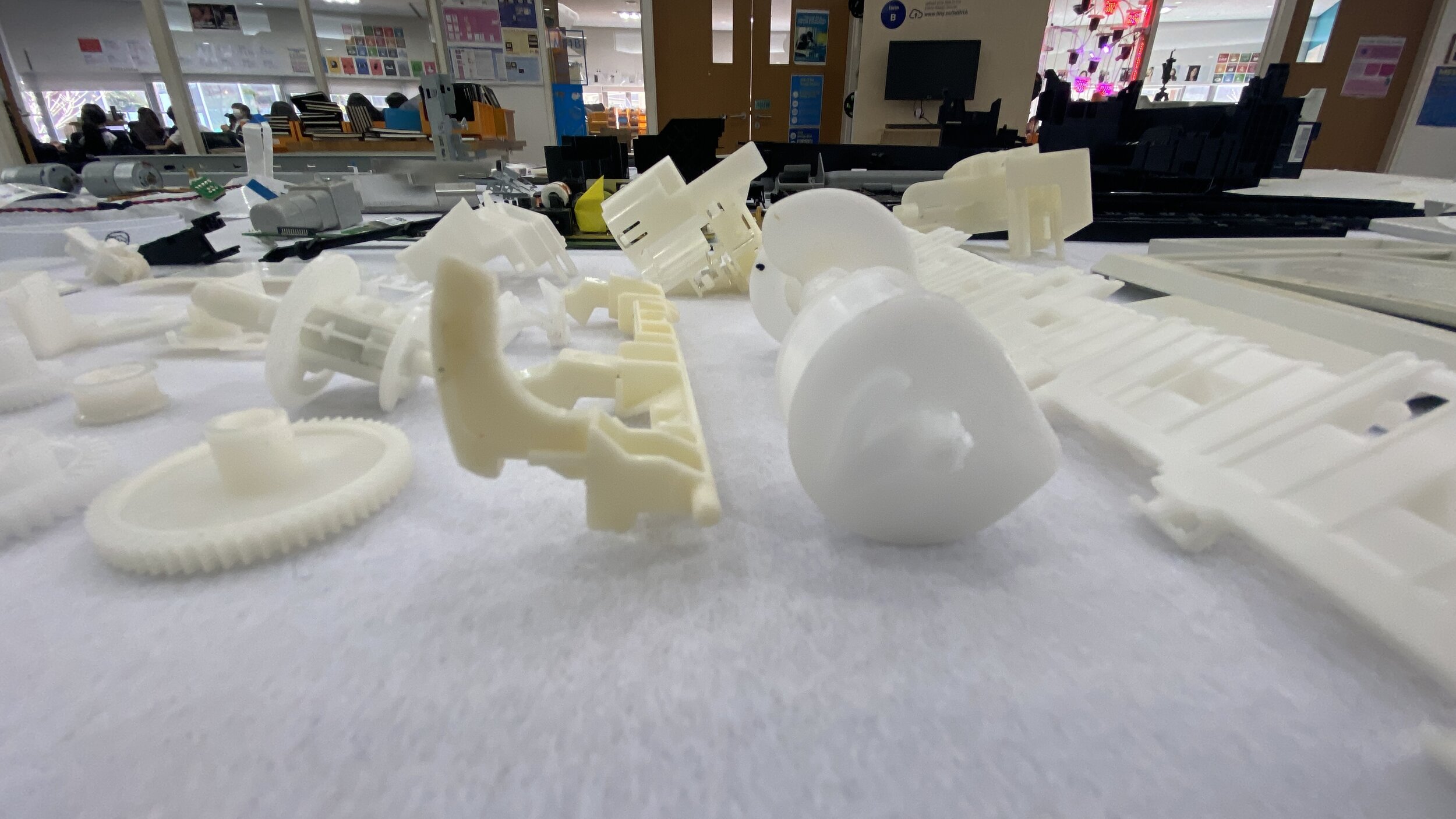
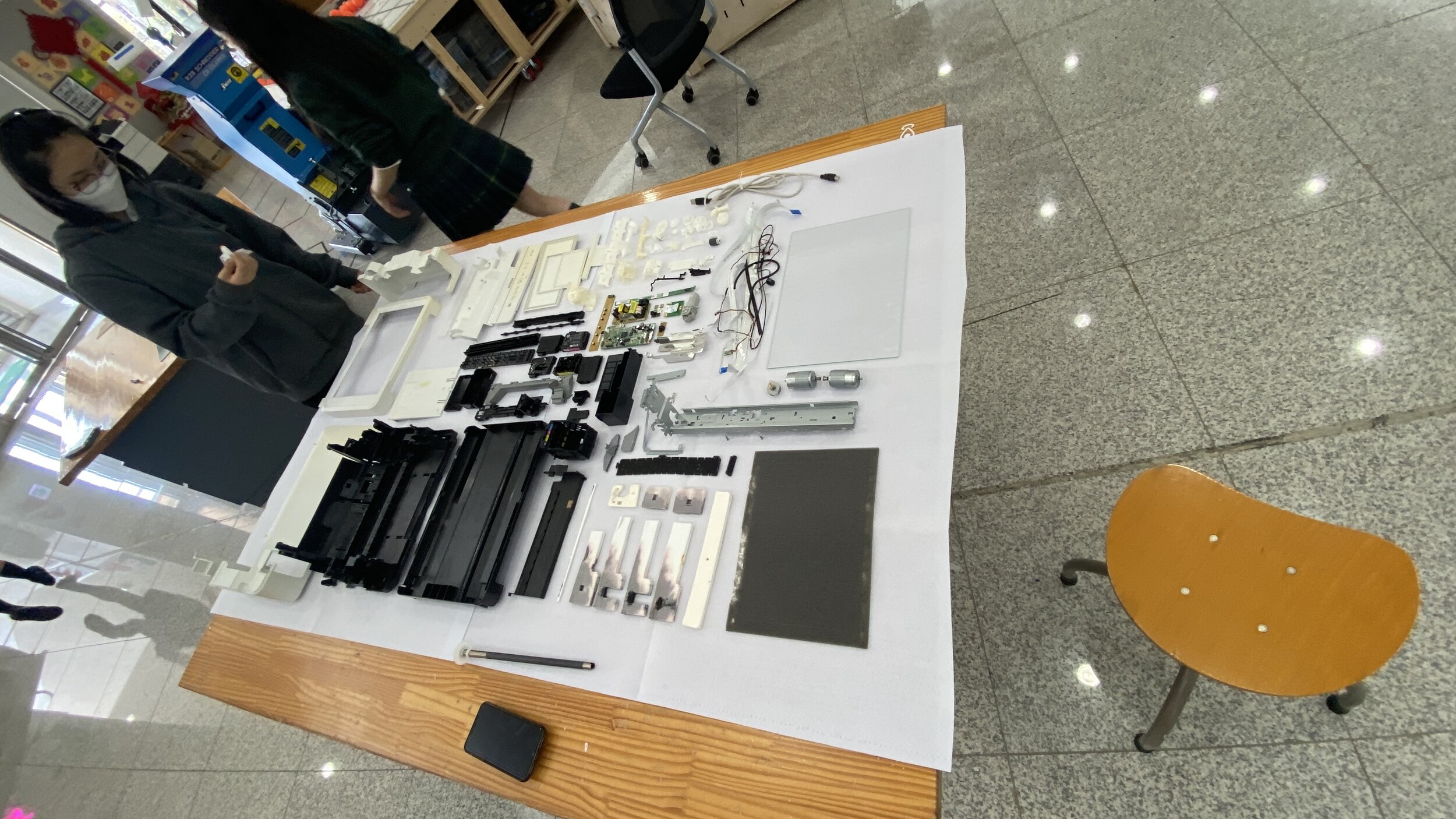
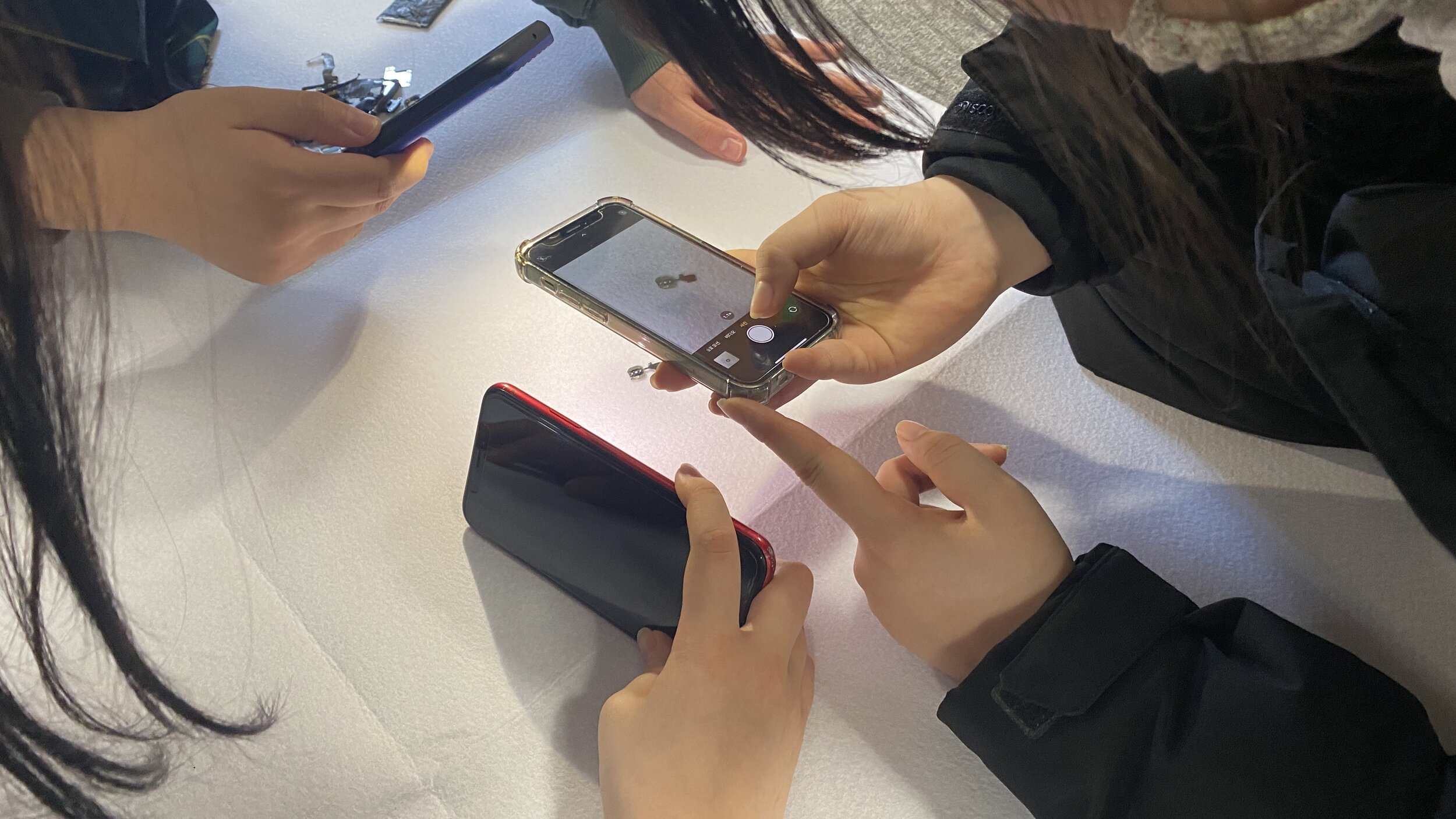
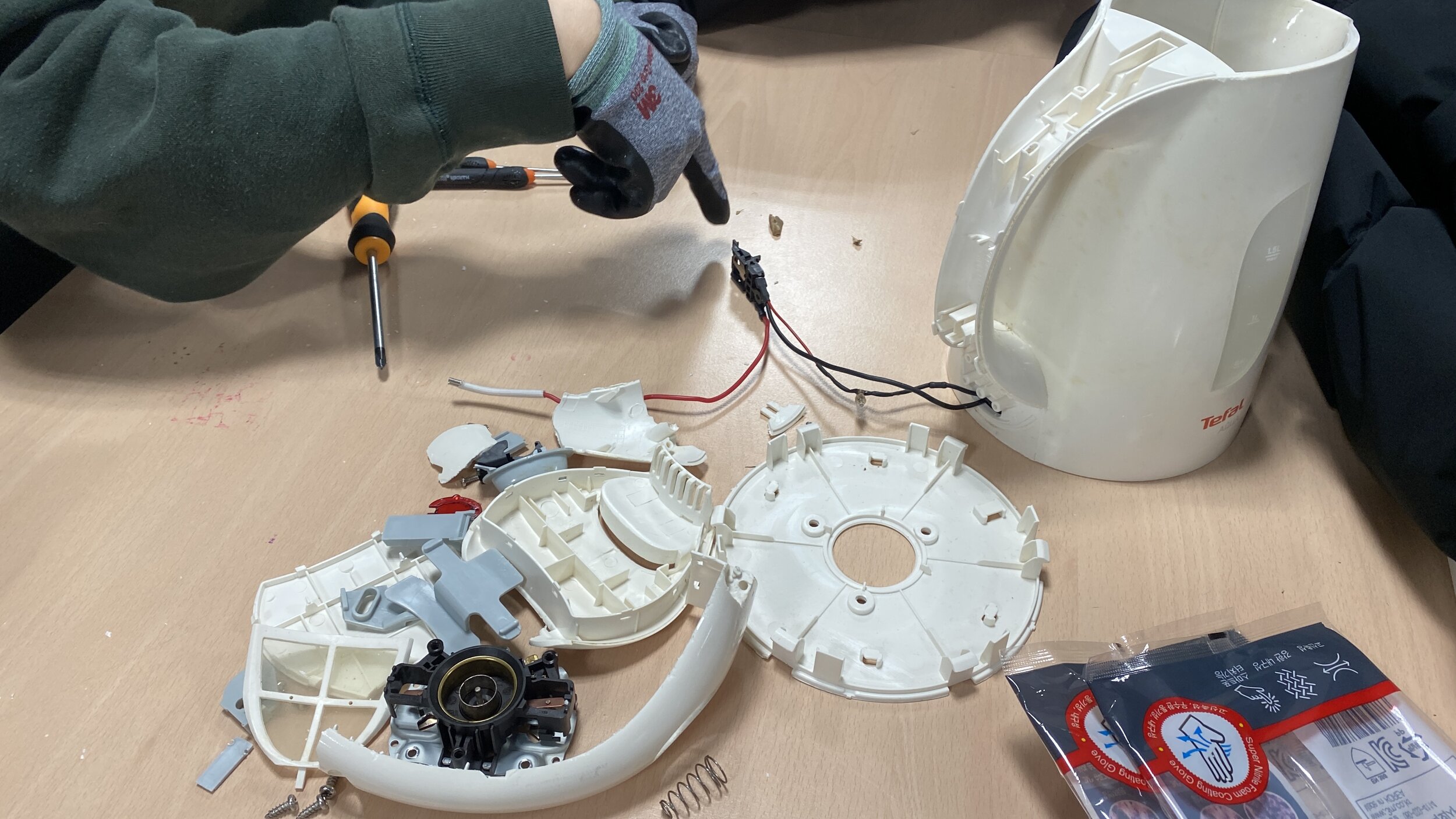
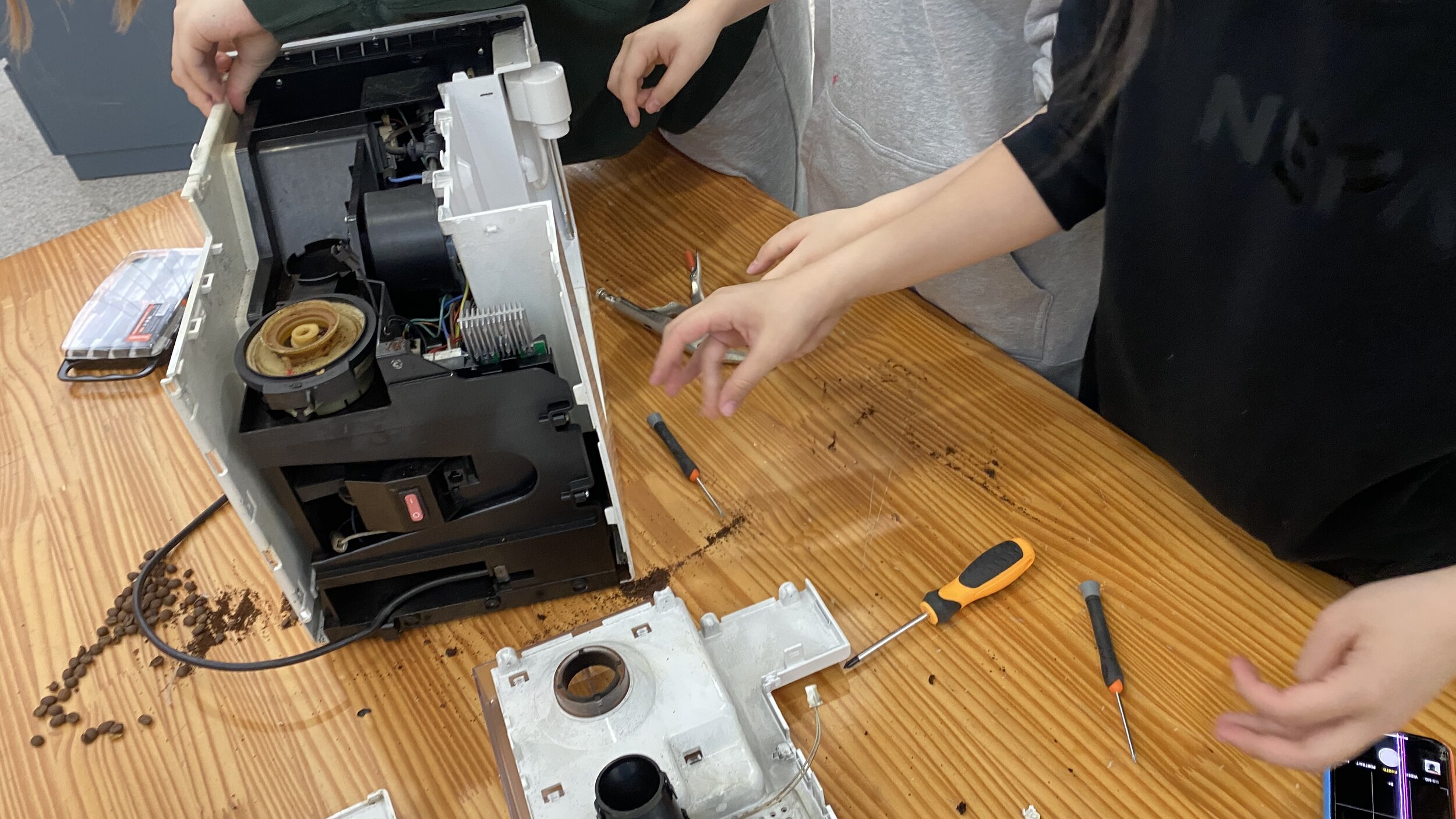
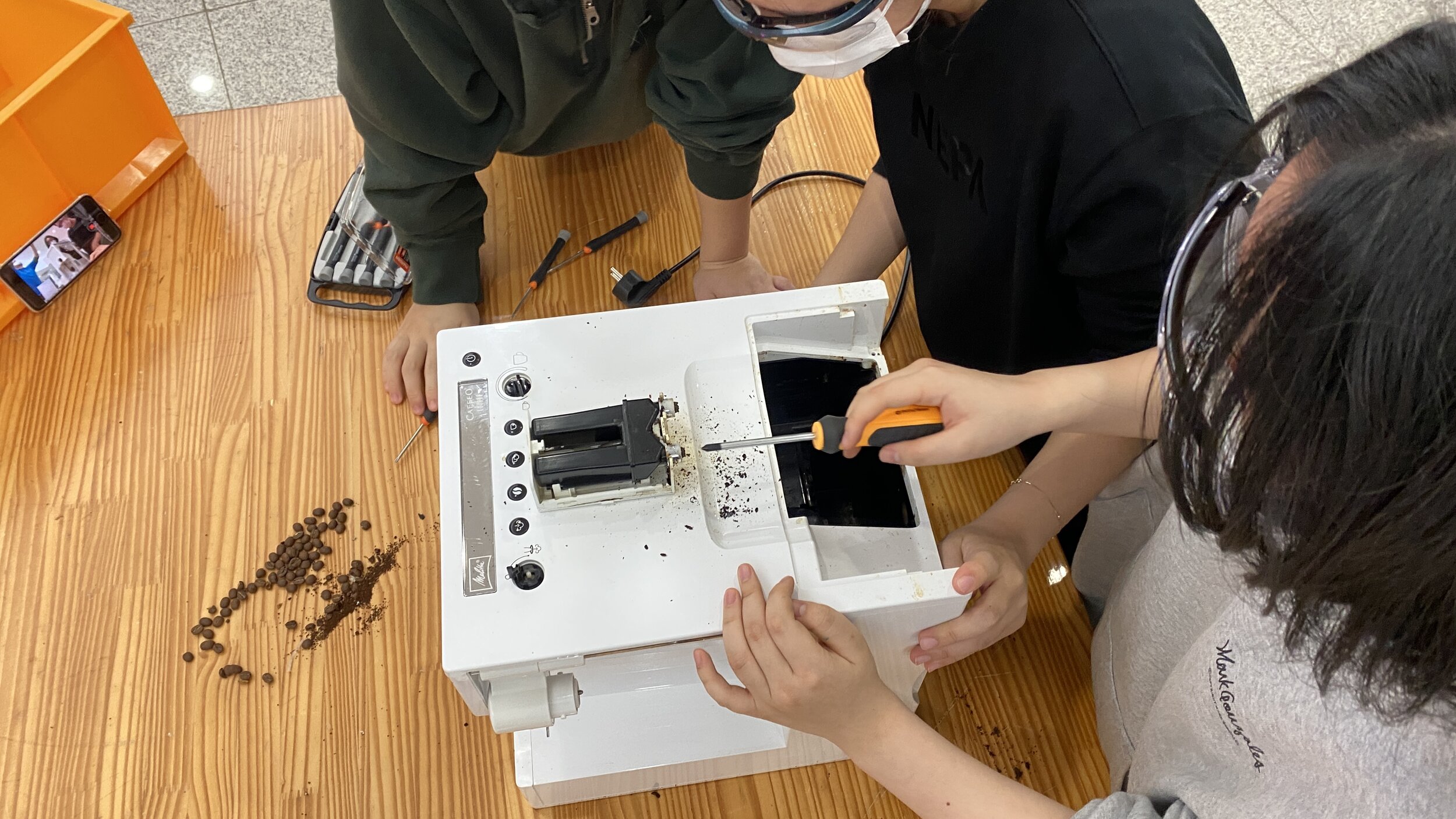
By far this was the most engaging part of the inquiry. Over two days students worked in teams to disassemble and document a product. For many, this was the first time disassembling an object. There was a liberating thrill in taking apart an object. These days were filled with lots of “ah-ha” and “wow” moments.
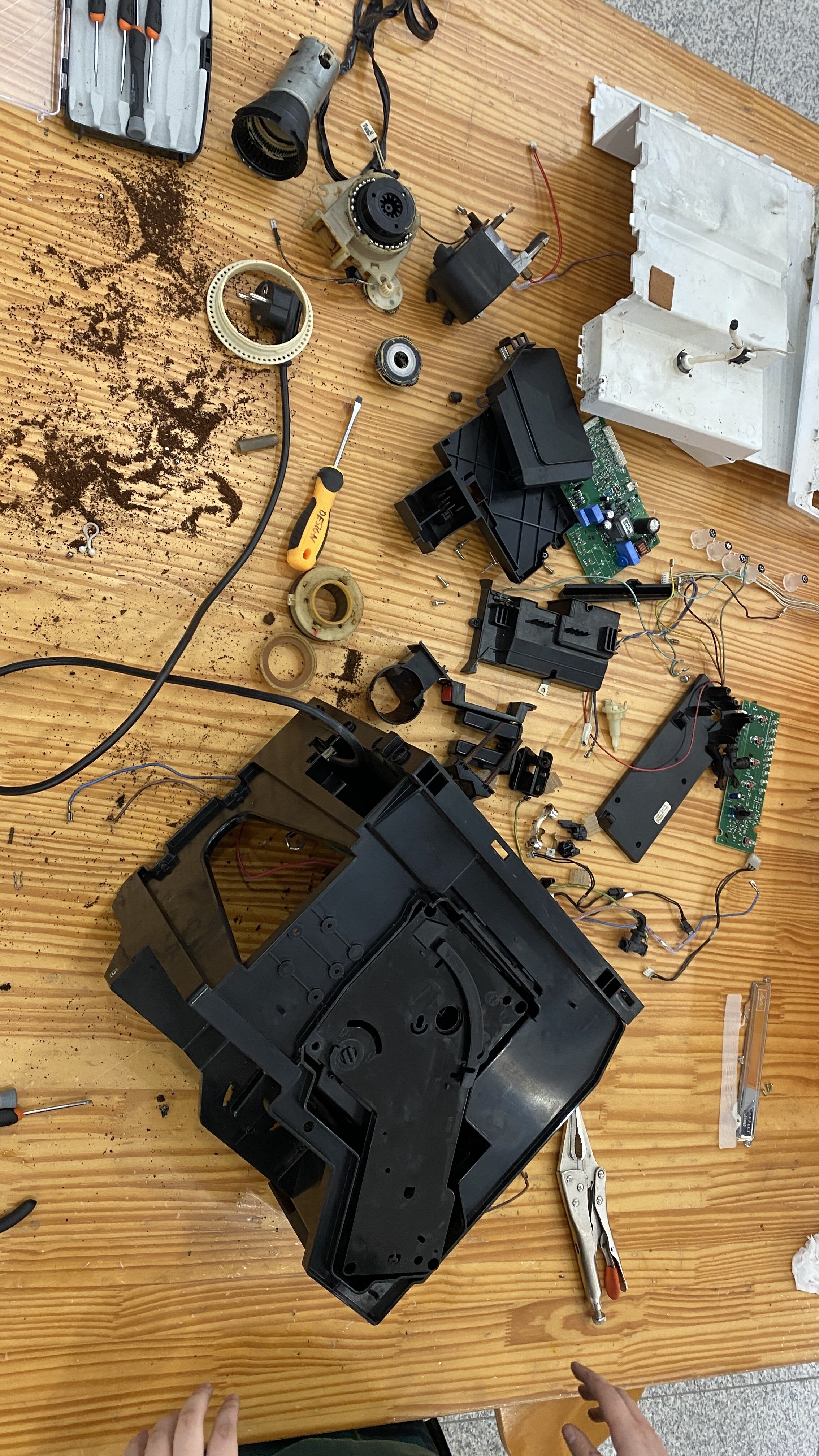
Analyzing and Documenting
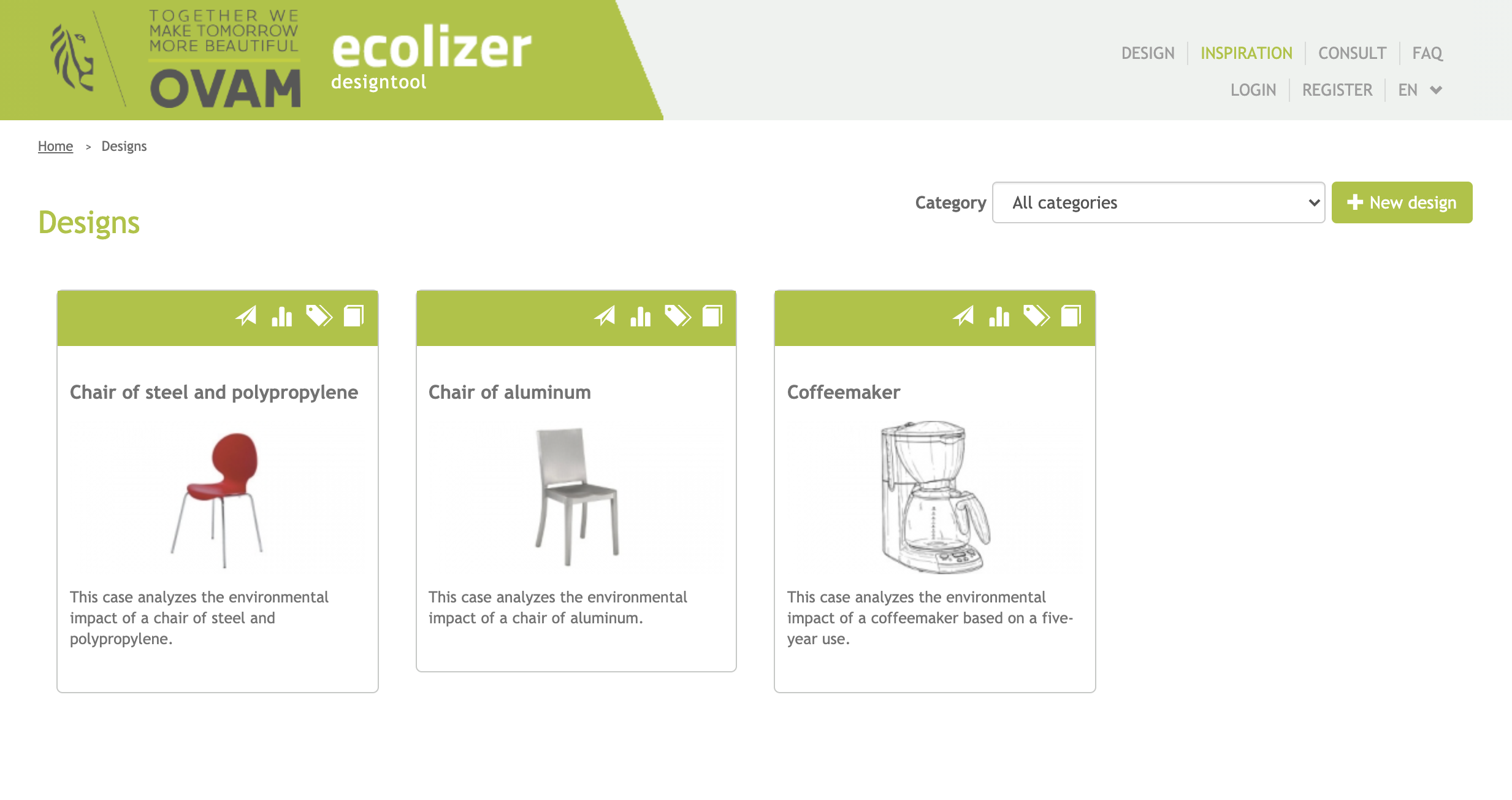
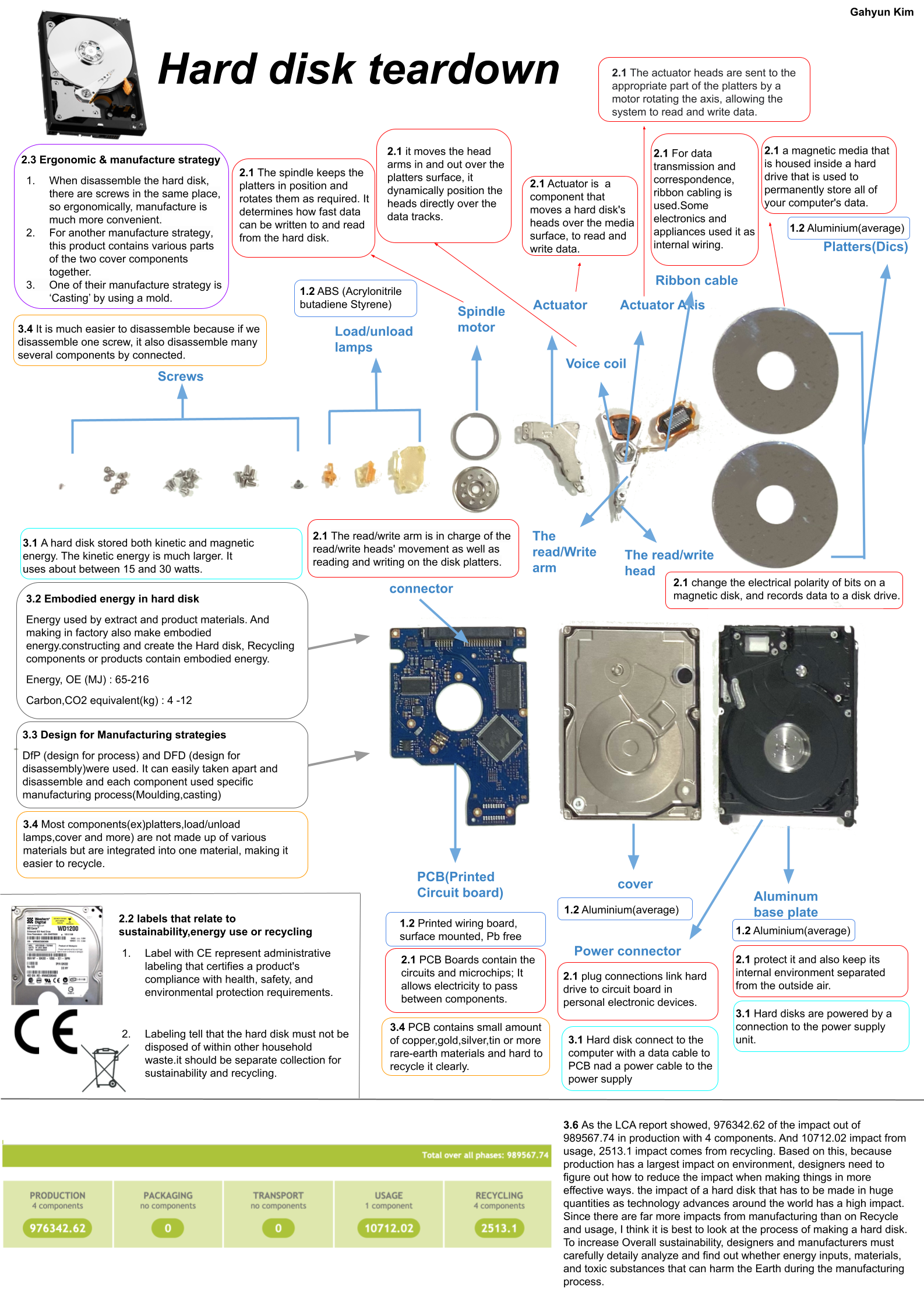
Students used the Ecolizer online LCA tool, made available for free by the Belgian government, to analyze their product and determine a score. Using the score, and the concepts covered earlier, they analyzed their products and presented their analysis in the form of a poster.
To aid and guide their analysis, students organized the content of their poster using a Parts-Purposes-Complexities thinking routine. We use this routine frequently and students are familiar with it as a tool for exploring and organizing knowledge. The Take Apart thinking routine from Agency By Design was also used to structure some of the activities, discussion
Presenting
The A2-size poster format was useful in that it allowed students to practice being concise and specific in their analysis, skills that they need for their Internal Assessment (IA). Students experimented with the layout and graphic design to communicate their knowledge and understanding.




Next steps
One of the challenges we faced were with the calculation of electronic materials. Many of the objects had electronic components (circuit boards, motors, power supplies…) in them. Finding an online LCA calculator that could accurately calculate this was a challenge. As we had just watched The Story of Stuff: The story of electronics, students were keen to address this issue head on.
Determining the specific material was also challenging. Unless a component was specifically labelled with its material, it was difficult to go beyond a broad classification of either glass, metal or plastic. Many educated guesses were made, and the discussion about the importance of labels to aid recycling and repair was valuable and eye-opening.

Reflecting on Designerly Ways of Knowing
The solution is not simply lying there among the data, like the dog among the spots in the well known perceptual puzzle; it has to be actively constructed by the designers own efforts.
Read More
Formative Feedback: Austin's Butterfly and the design student
Timely, targeted, and specific formative feedback is essential to students' progress and development. As a teacher, it can be challenging to highlight the importance of this to students, and to engage them in the this powerful process. In particular, peer feedback is something that students sometimes view as a make-work-project without fully empathizing with why we do it.
Recently, I've started to share the video "Austin's Butterfly" with students to help frame for them the power of formative feedback. The reactions are always surprising as students follow along adn empathize with Austin's journey. Though the age of Austin and the students in the video is much younger than that of our MYP middle school girls, it is still a powerful teaching tool to introduce the how, and in particular the why of the role fo formative feedback.

Moonrise: One of the first photos of Earth taken from the Moon and used to frame the inquiry.
Designing Like You Give a Damn
One of the issues that we have returned to again and again in Grade 9 and Grade 10 design is sustainability. As designers, we have a responsibility to design in a sustainable manner. We are decision makers at critical stages of a product's development, and these decisions have impacts, both predicted and unforeseen.
We've been working on developing units and inquiries that provide opportunities for students to authentically investigate issues of importance. Trying to move beyond just "using sustainable materials", we are interested in empowering our students to think big and act big.
These goals were the impetus for the unit Designing Link You Give A Damn.
Students could choose to inquire into one of four areas:
- Access to clean water
- Mindfulness
- Plastic in our ecosystem
- Vaccine delivery
The way this inquiry was structured was also a departure of from typical units:
- Students worked in groups during the research stage, but individually in the concept development and design stages
- A website was used to deliver content and resources
- Inquiry was largely student directed. At this point in their MYP design education (MYP Year 5), they should be able to apply the design cycle to solving problems with minimal support of the teacher
Overall, this unit has had the highest level of student engagement and greatest amount of autonomy. It's been wonderful to see. In discussions with students the feedback focused on the development and refinement of ideas. At this stage in their MYP design journey they had started to use the design cycle as a tool to structure their inquiry, rather than steps they had to write about.
After completing the investigation, we developed posters to present our ideas for critique and feedback.
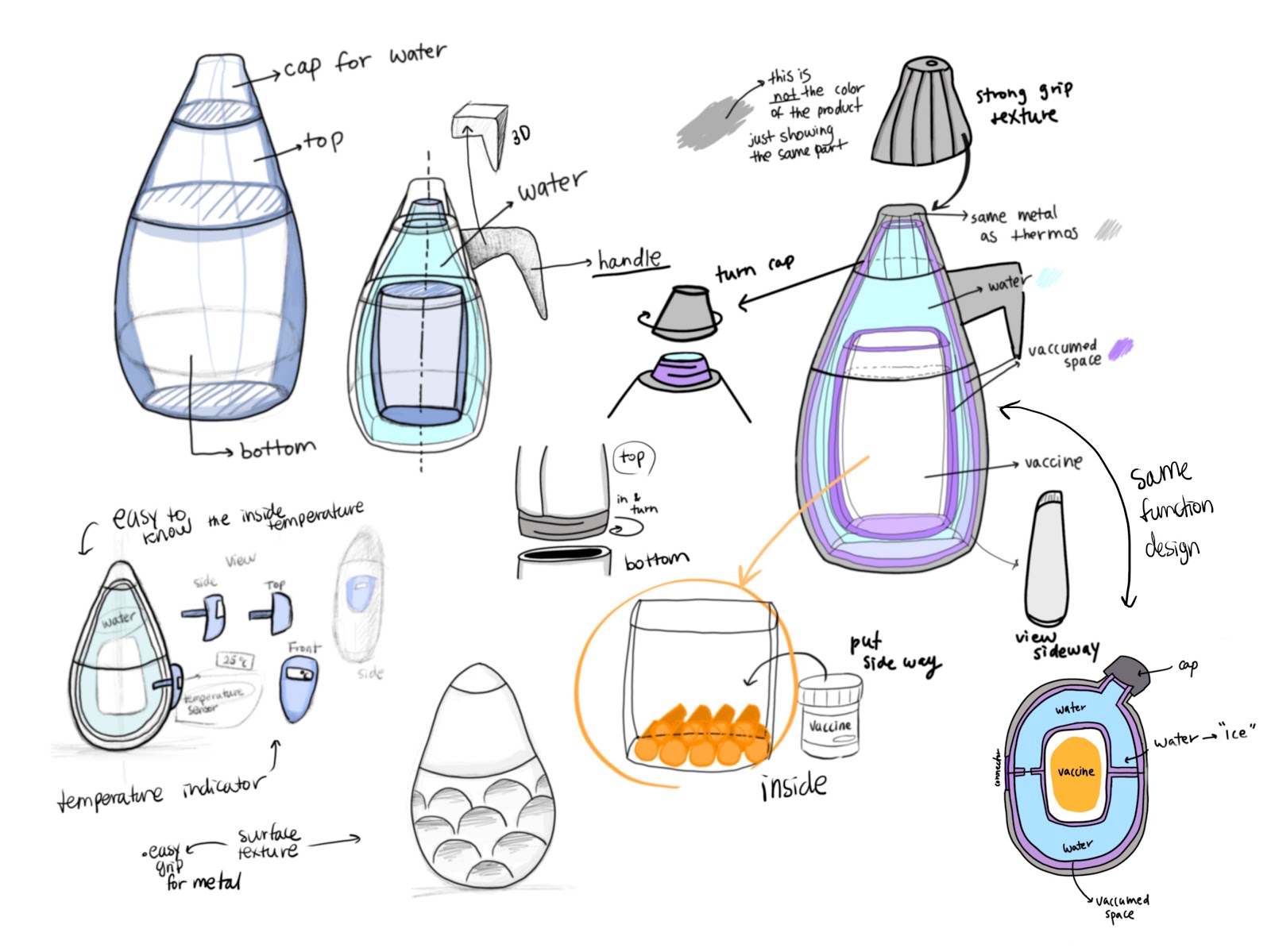
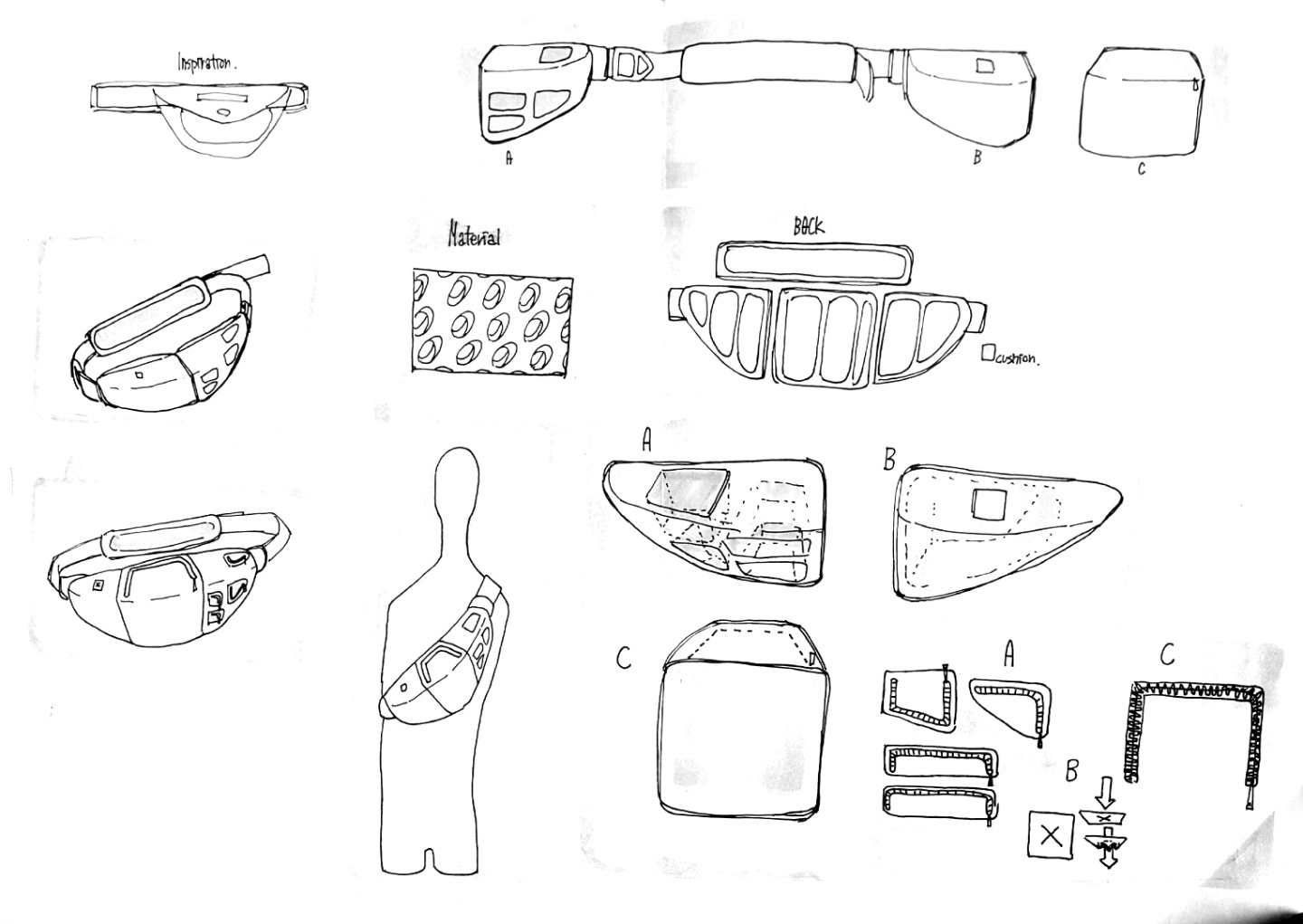
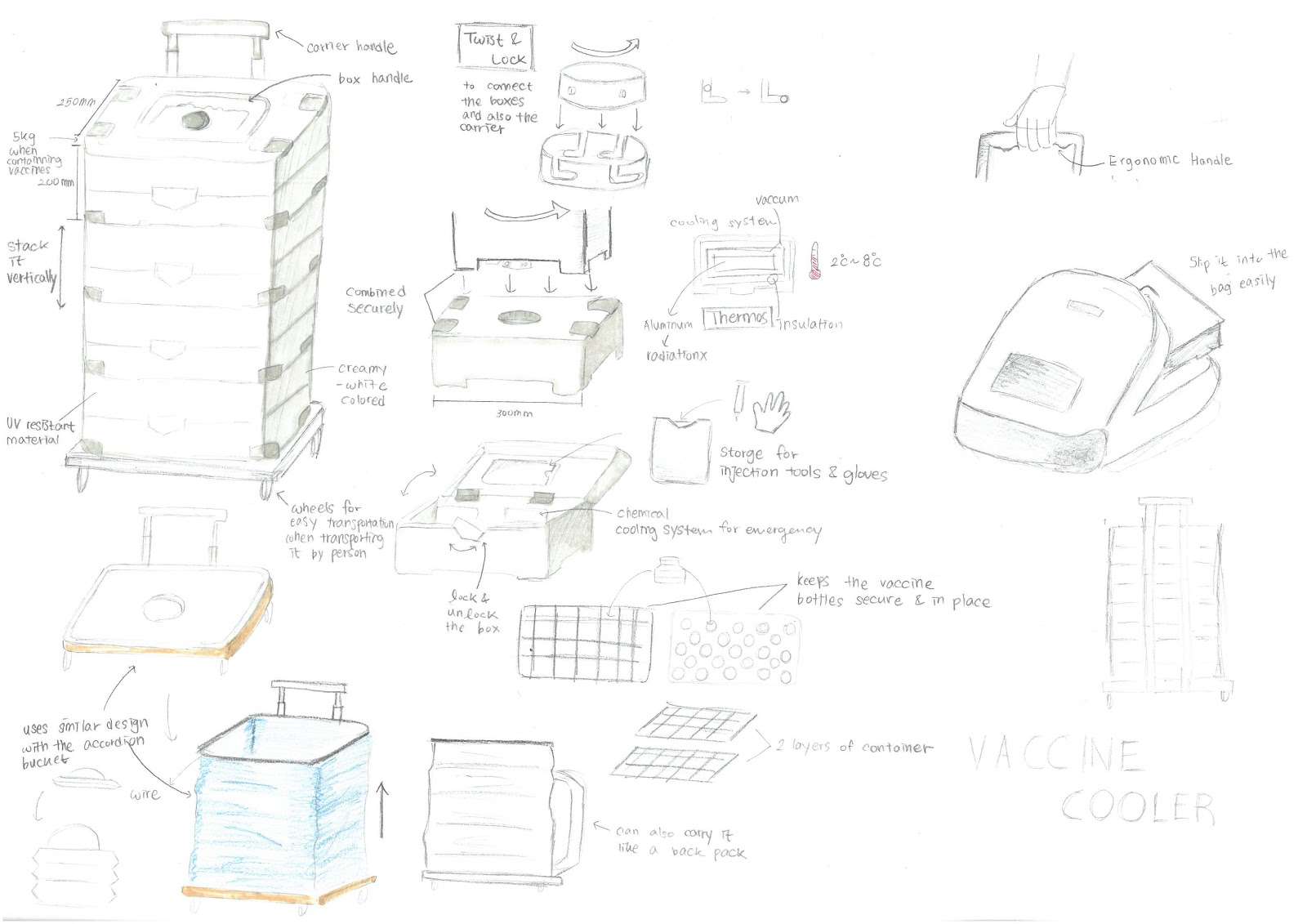
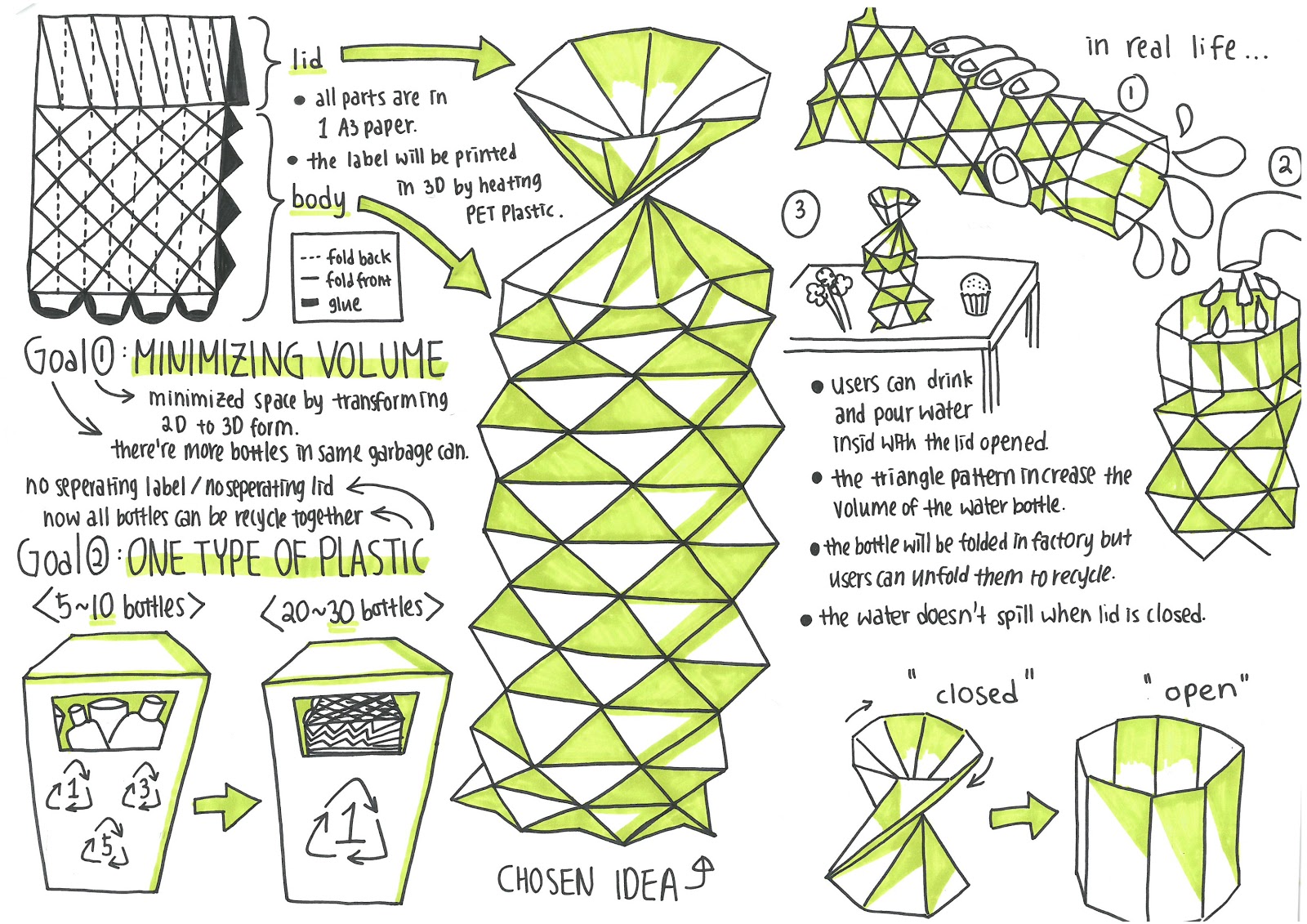
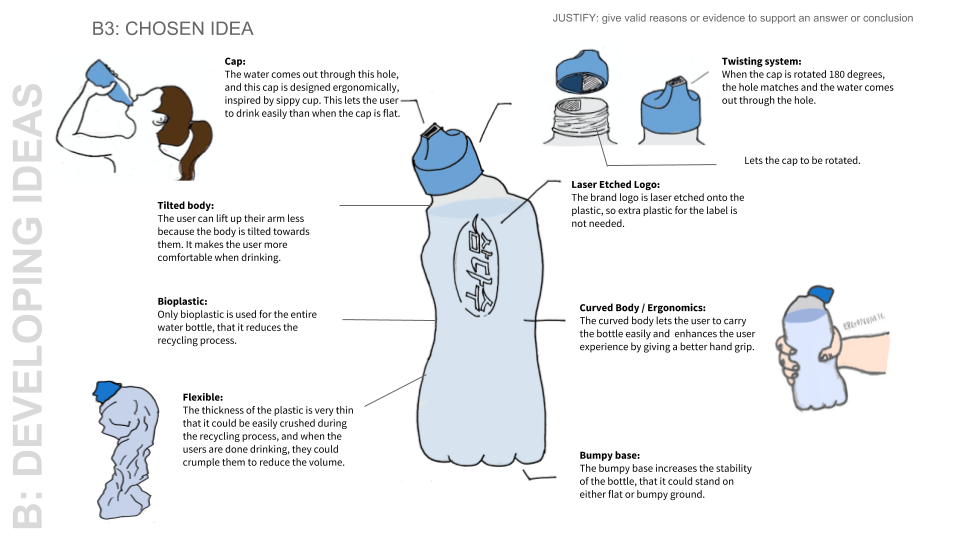
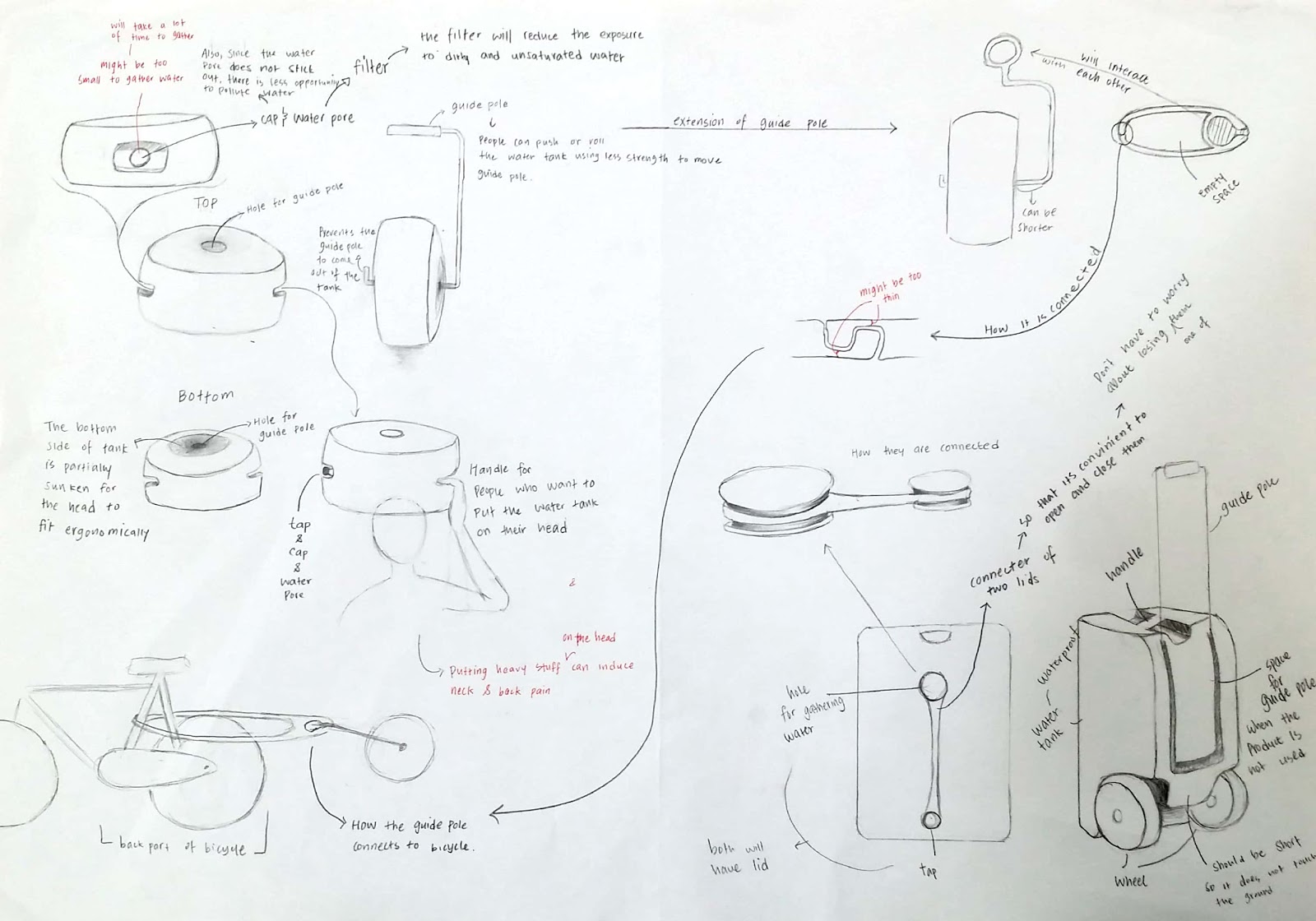
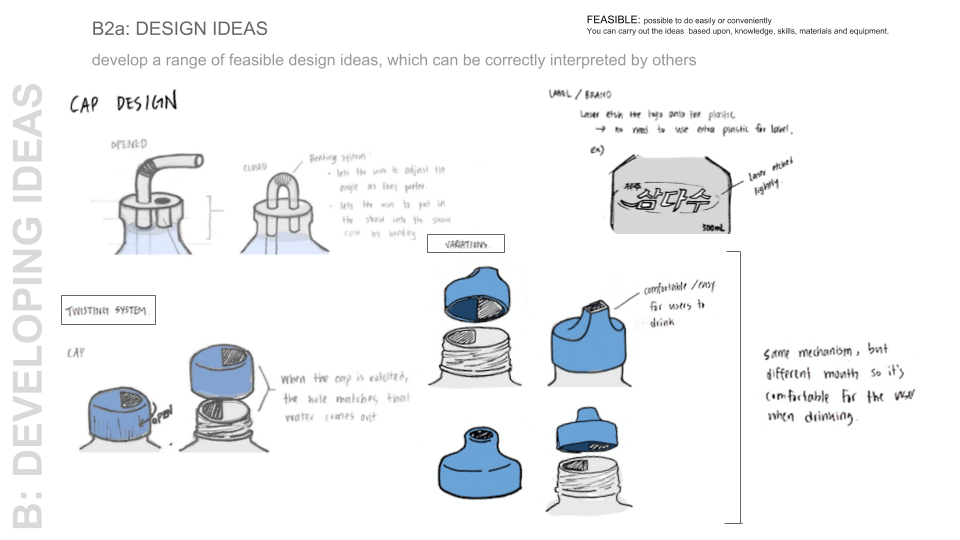
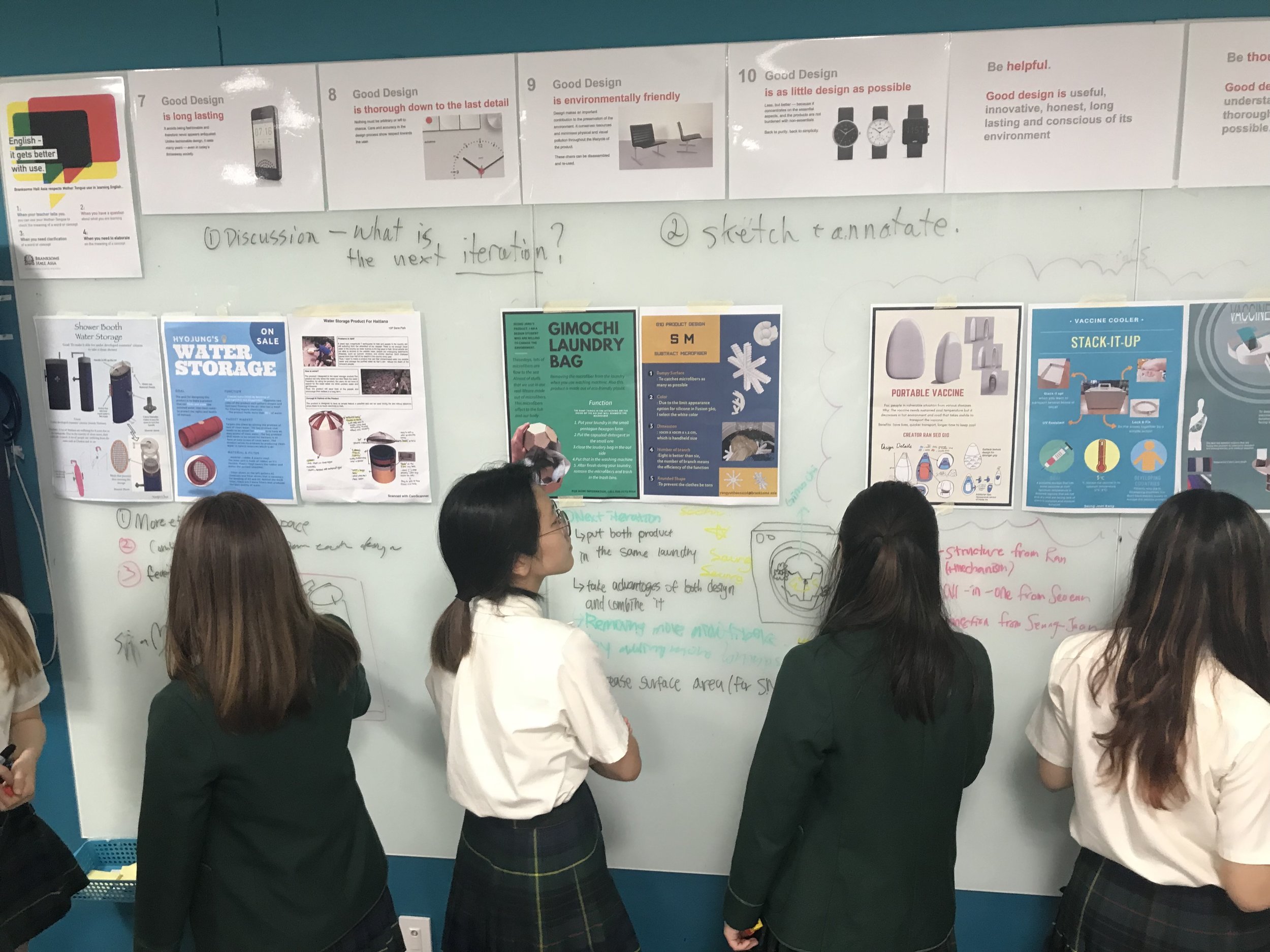
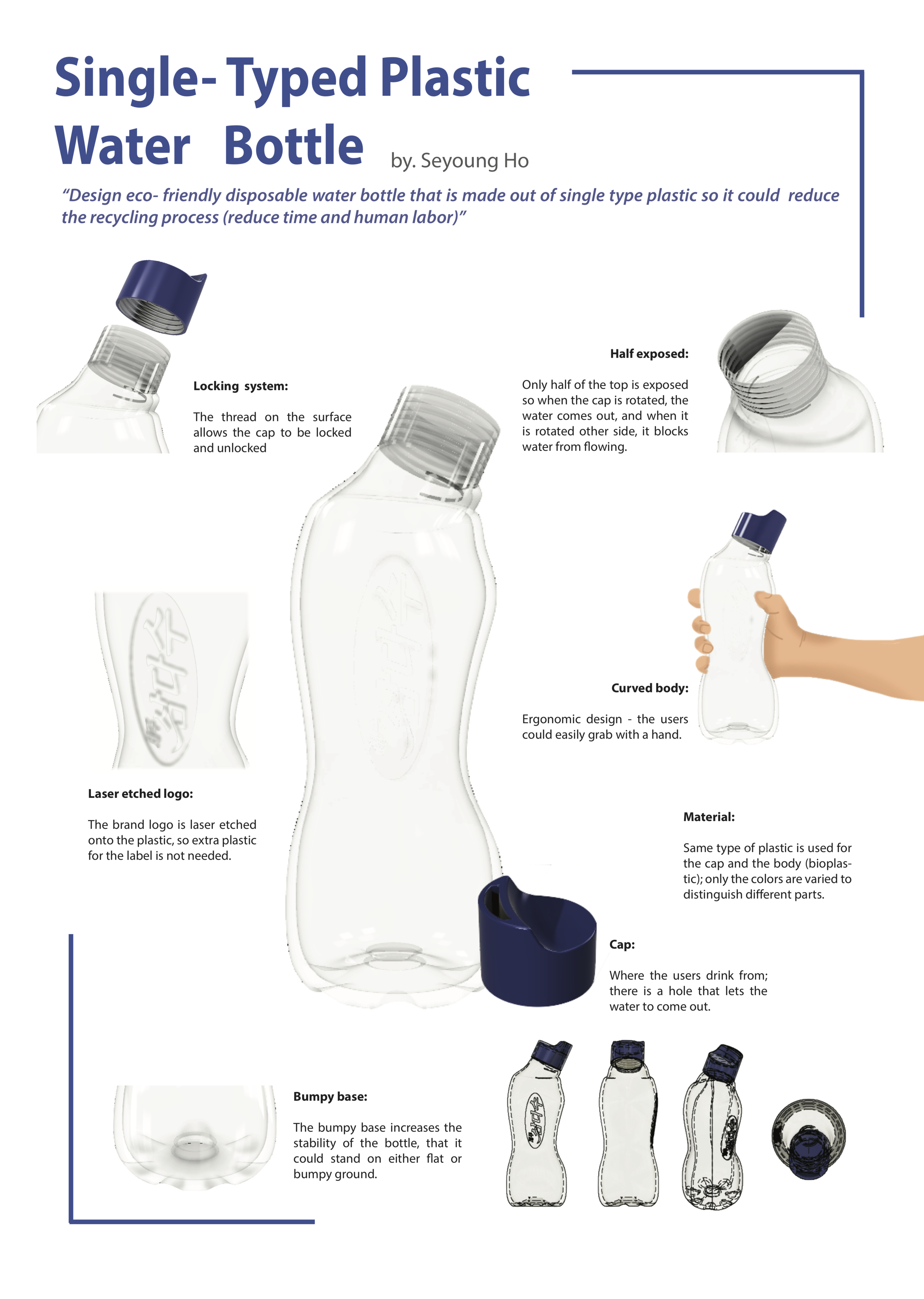
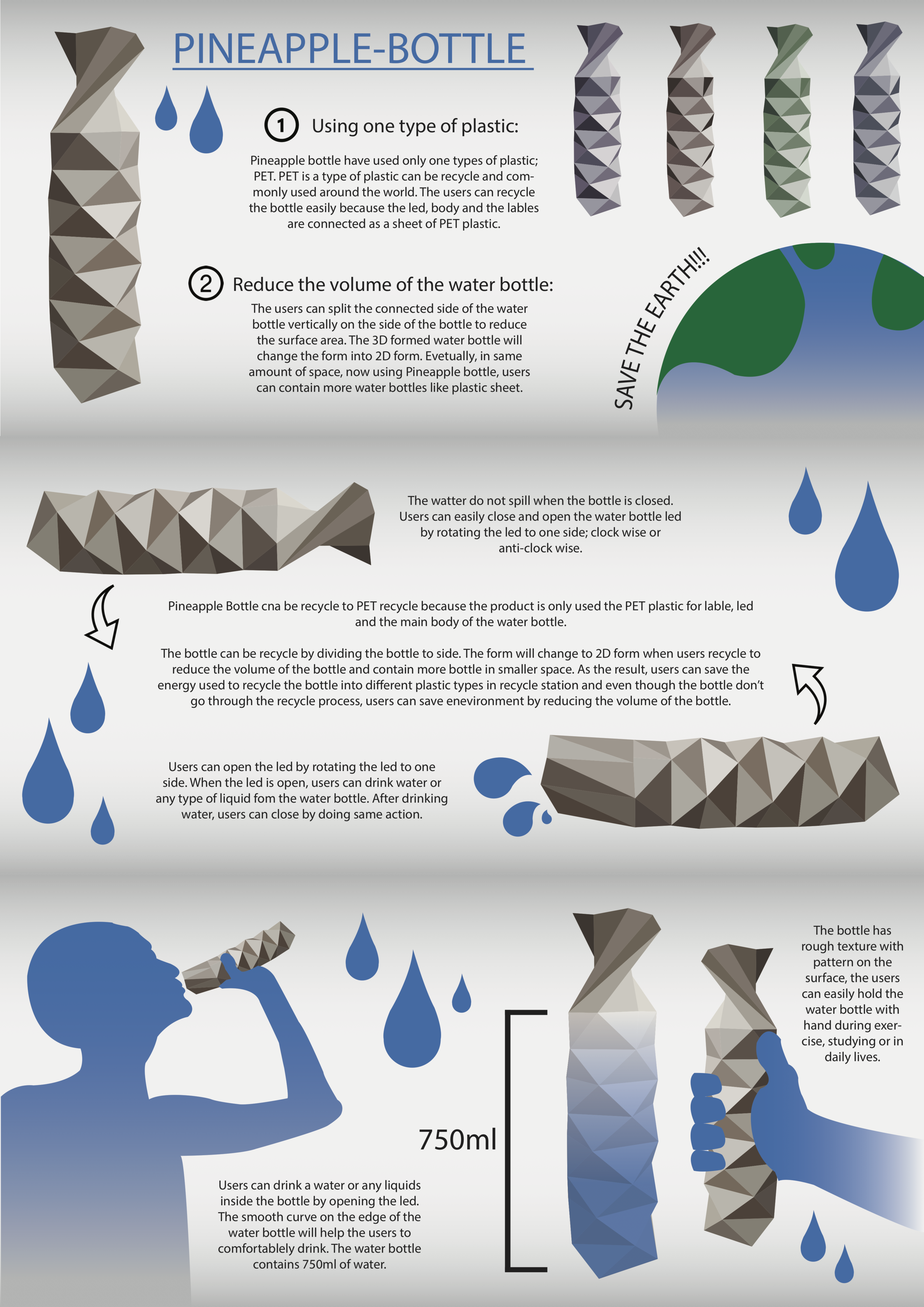
Part of the feedback process involved the students meeting back together in their original group to compare and iterate their next design. This was an exciting step as they reviewed the different directions each of them had gone in and then discussed and iterated a new design based on their inquiry.

The group above came up with a particularly innovative solution for vaccine transport and storage. From left to right: A portable container to keep vaccines at a stable temperature; a large vaccine storage system that is stackable; A shoulder bag that the nurse would wear when traveling to remote areas that contains vaccines, first aid kit, as well as a used needle storage container. In discussion at the board, the group realized their ideas could work together to create a vaccine delivery system. The container would be the key element. The stackable storage would be re-engineered to store the containers for safe and easy access. The shoulder bag would be redesigned to accommodate the containers. It was a pity that this iteration activity took place on the last day of class.
As a teacher, it was great to see students engaged in these kinds of meaningful challenges. The next step is to redefine the challenges for an authentic audience where the designs can be taken even further forward to reality.

Continuum of Inquiry for Design and Science IDUs
Developing a Continuum of Inquiry: First steps
In Washington DC right now at the National Coalition of Girls Schools Global Forum II. My colleague, Kathy Binns, Head of Science, and I are presenting on our work integrating science and design in interdisciplinary projects. This has been a valuable opportunity for us to reflect on where our respective programs (Design and Science) are going, and how they overlap and support each other.
Our presentation shared what we have been doing and our thinking about future directions. As an IB school, we are focused on developing our students into inquirers and thinkers. Our interest lies in developing our students' skills to become collaborative and independent designers and thinkers.
Thinking of inquiry as a continuum, we have conceptualized it as above. Each grade level undertakes a large-scale IDU (Inter-Disciplinary Unit) during the course of the year. We envision these intensive experiences as opportunities to develop and apply skills and understandings, with each year building on the previous, towards a culmination in year 11.
- Grade 6: Collaborative experiences that develop these
- Grade 7: Presentation and Communication of learning
- Grade 8: Risk-taking to develop unique solutions
- Grade 9: Inquiry using data and iteration to solve challenging problems
- Grade 10: Applying research and analysis to synthesize new solutions to challenging problems
- Grade 11: Collaborative scientific inquiry to support the Group 4 project (a mandatory part of the DP curriculum)
The Grade 9 and Grade 10 projects dealt with sustainable energy production and biomimicry, respectively. This year, Grade 8 inquired into developing oil recover systems using robots. This was inspired by an oil spill of the cost of Jeju Island. Our grade 7 unit was performance art based, while the grade 6 explored digital media and story-telling.
This framework is the first step for us. It builds upon what we already have in our curriculums. Yet, we did not really know what had until we started to reflect on the connections. Based on some conversations with others at the conference, as well as watching some excellent presentations, we are inspired to iterate these IDUs further. Developing service opportunities and authentic audiences are our next steps, as well as strengthening the connections we already have are our two goals.
GRASPS and Authenticity
When teaching design, we are asking the student to adopt the role of the designer. But for many, that is an unclear role. Students may be unclear about the aspects of their role and how to be successful in it.
A bigger question is the authenticity of the task-- Are we asking students to do something that would be done in the real world outside of the classroom? McTighe and Wiggins define a performance task as authentic if it "reflects the way in which people in the world outside of school must use knowledge and skill to address various situations where expertise is tested or challenged." This distinction helps frame the significance and relevance of the task for the student. Students can see the value of learning the content and developing a solution.
Having performance tasks that are clear and authentic also allow for better assessment - the expectations are clear and we (the teachers) can see evidence of transfer of knowledge and understanding--the synthesis of knowledge into a design solution.
Our program has been thinking about the authenticity of our tasks and units as we continue to develop the conceptual inquiry nature of our program. We have started to use the G.R.A.S.P.S. model to structure performance tasks to clarify expectations and goals, both for the teachers and the students. The assessment associated with the inquiry is structured around the following expectations and goals.
- Goal: A definition of the problem or goal
- Role: Define the role of the student
- Audience: Identify the target audience
- Situation: This is the context or scenario of the goal
- Product: What is created and why it will be created
- Standards: Rubrics or success criteria
A recent unit title Designing Like You Give A Damn, used this model to develop an open inquiry into issues of sustainability and global importance. On the Unit website, parts of the grasp model are made clear for the students.
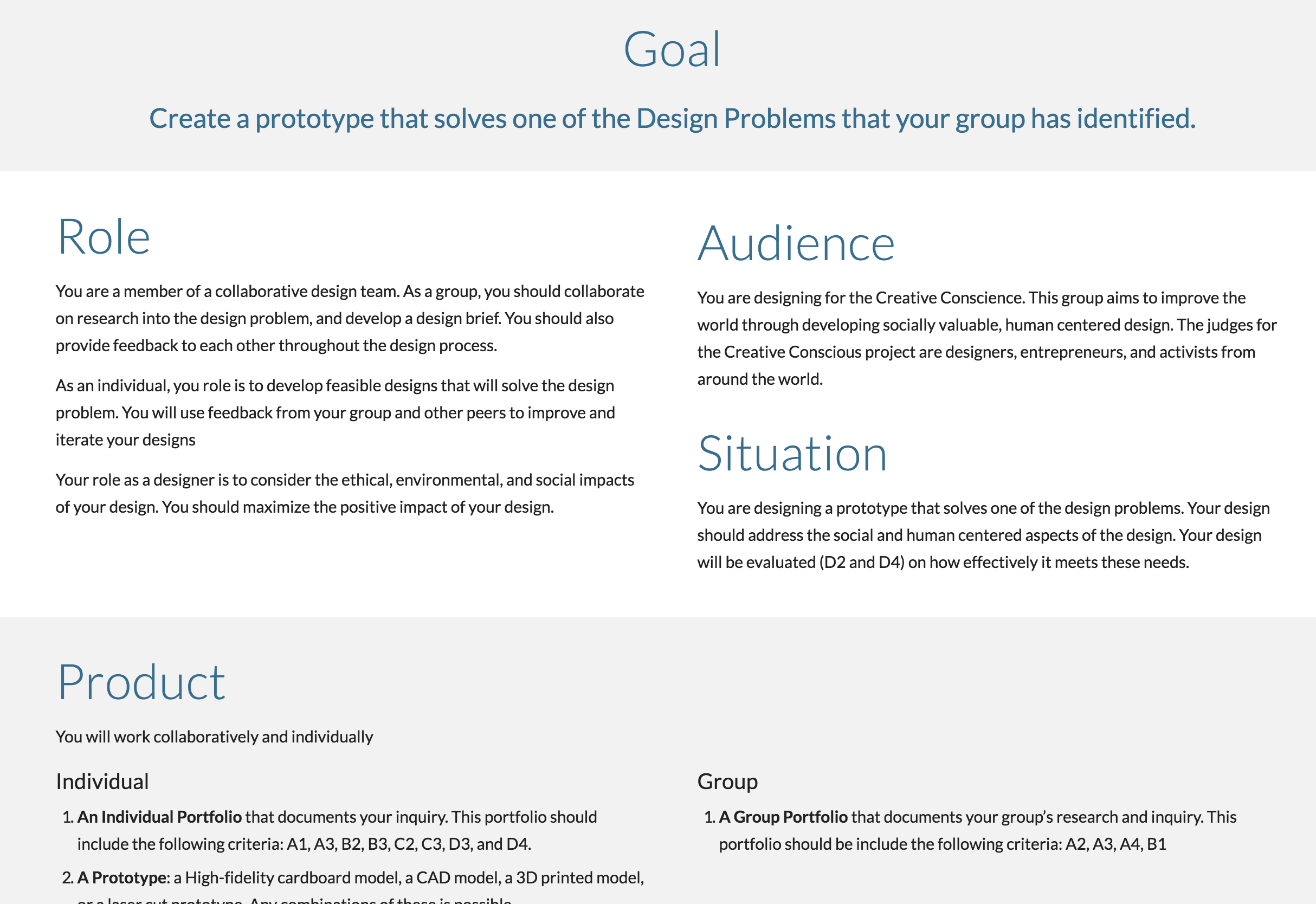
We are looking to further develop these as the framework for developing our units and assessment pieces, with the goal of moving towards authentic assessment and authentic tasks.
Biomimicry Inquiry: Nature inspiring solutions
Nature offers incredible inspiration and time-tested strategies that can be emulated and applied to climate change issues in realms as diverse as energy, water, transportation, buildings and infrastructure, food systems, health, behavior change, and more. Biomimicry is an exciting area of science and design that draws upon natural forms and shapes to inspire solutions to design challenges. It is rooted in the understanding that natural forms and systems are optimized for efficiency and sustainability.


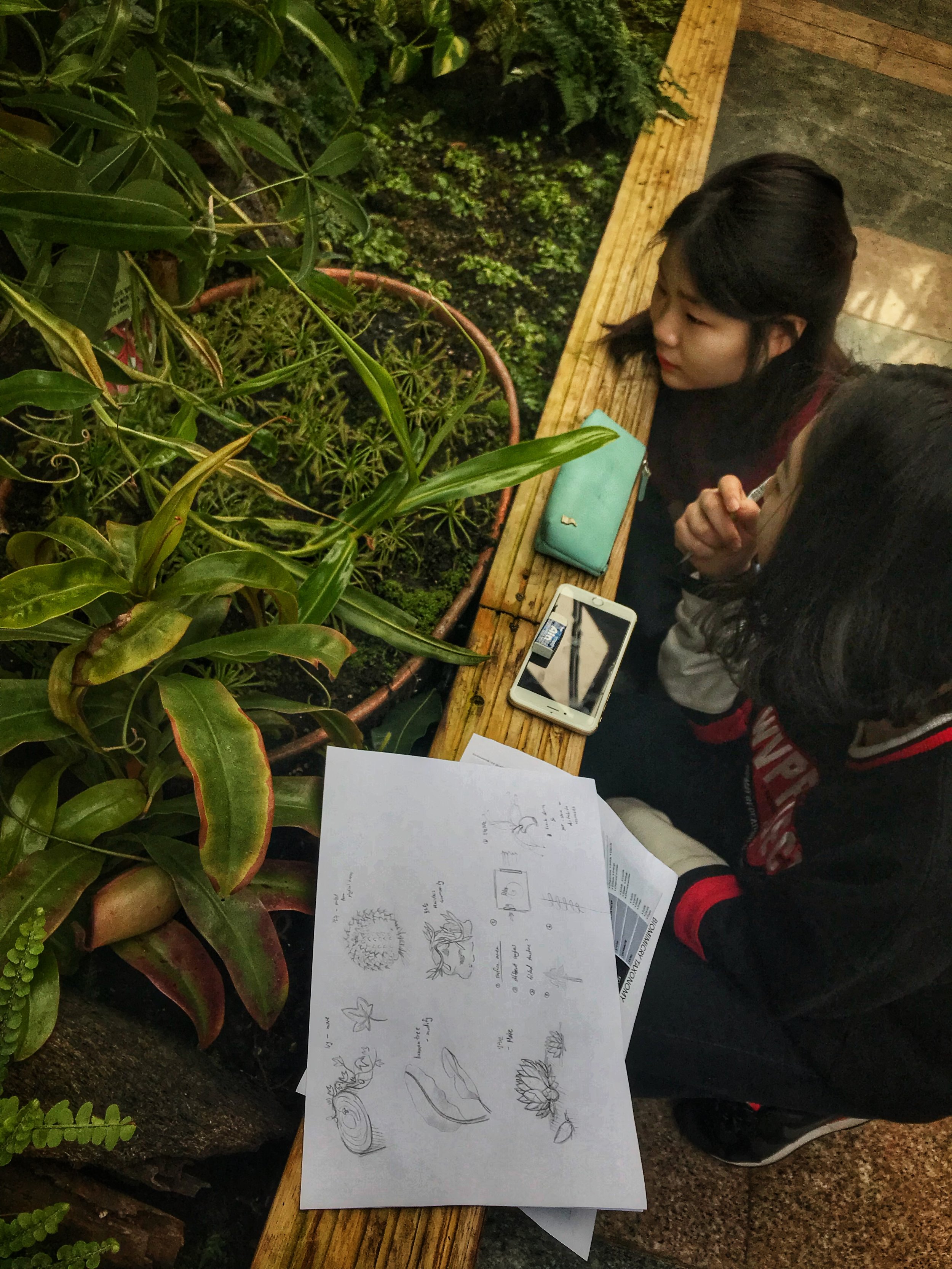
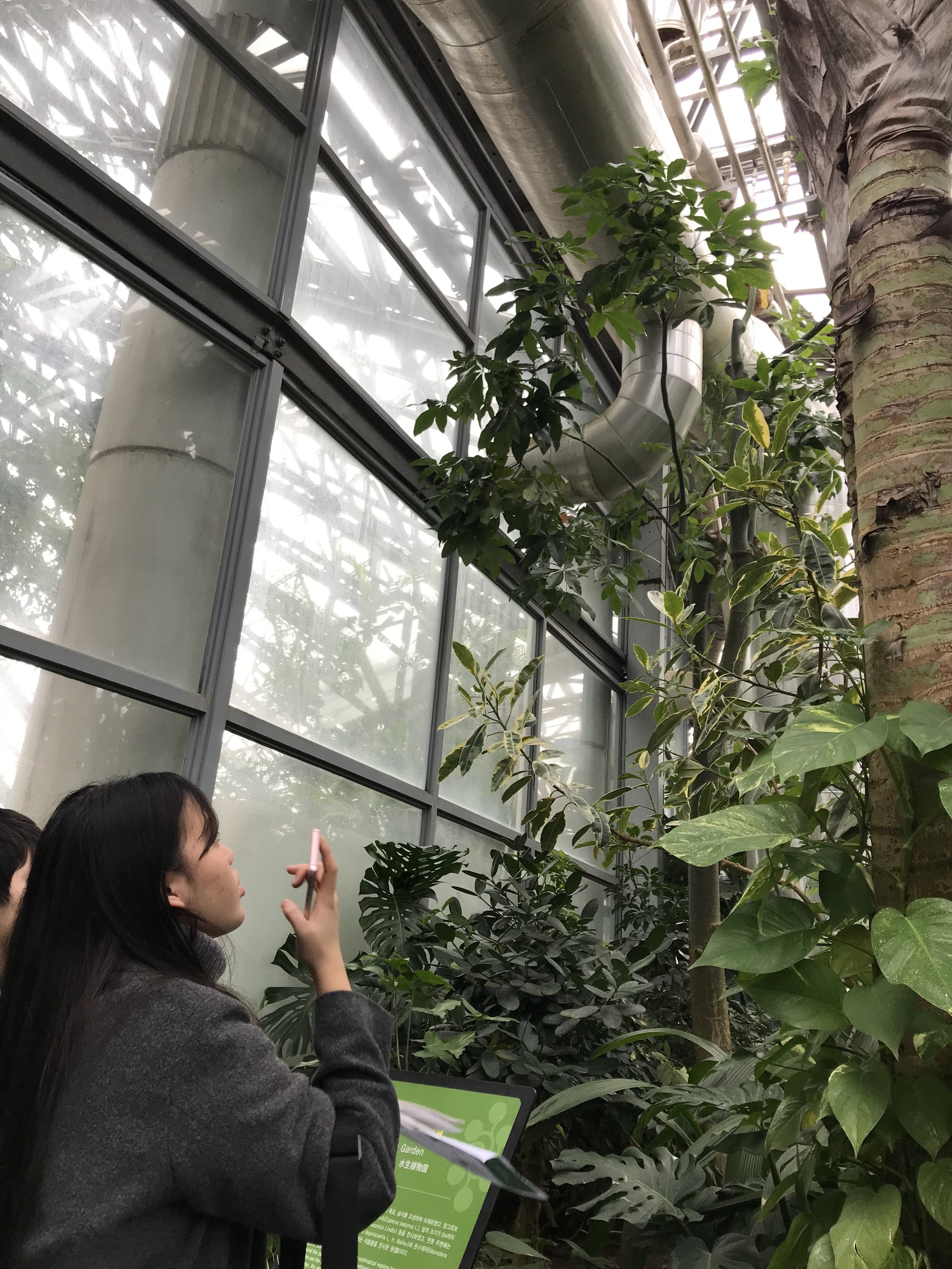

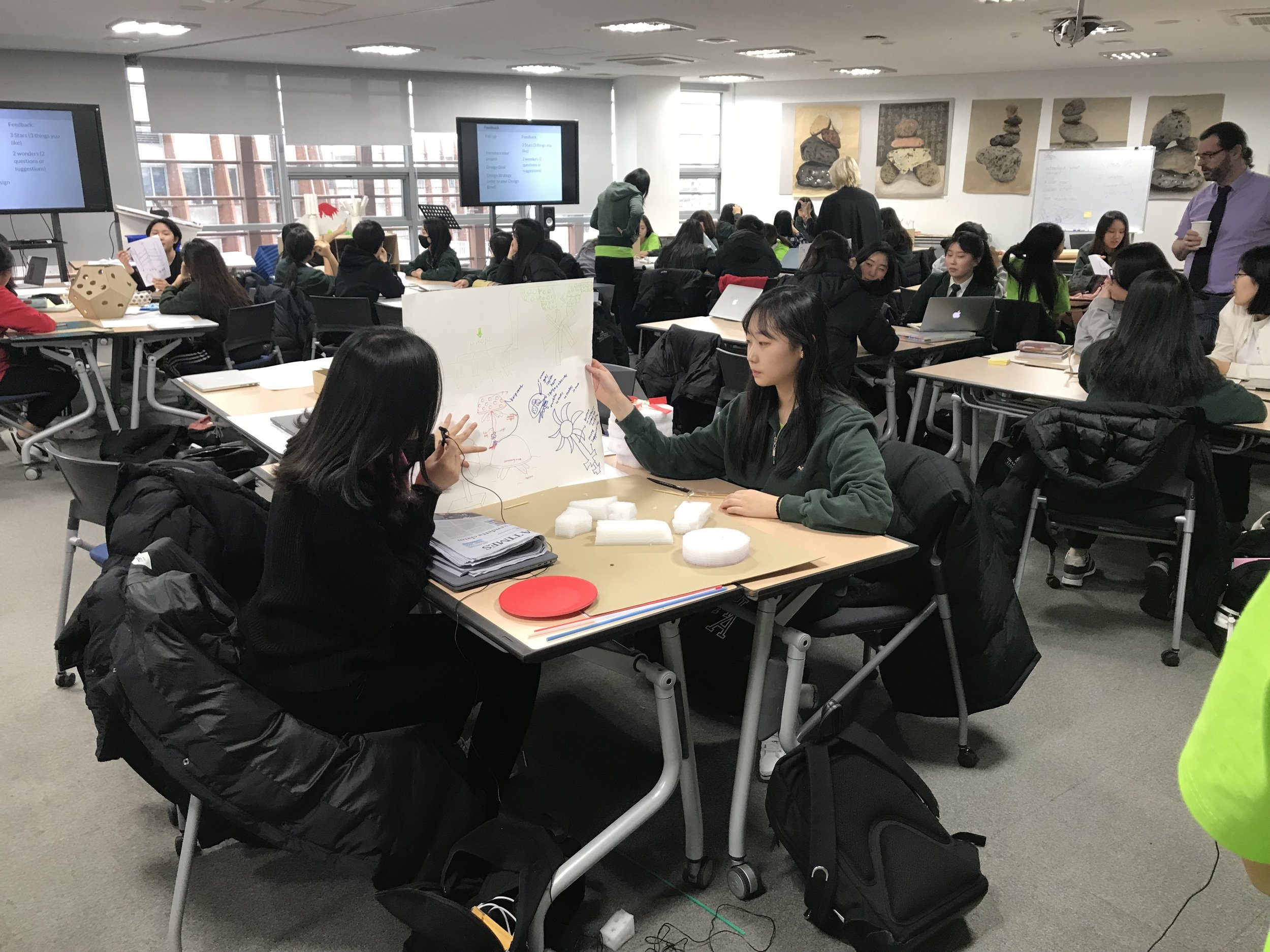

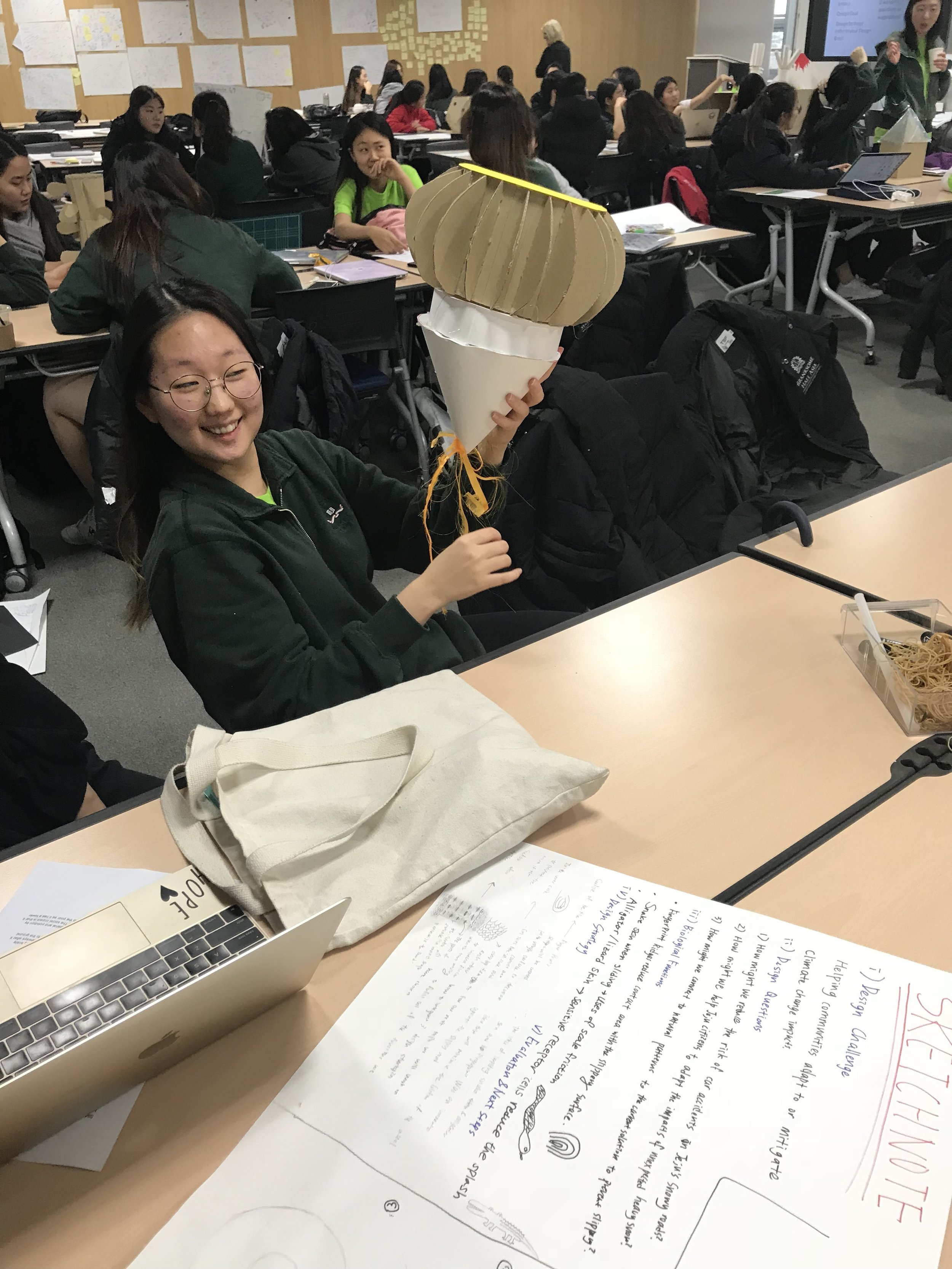
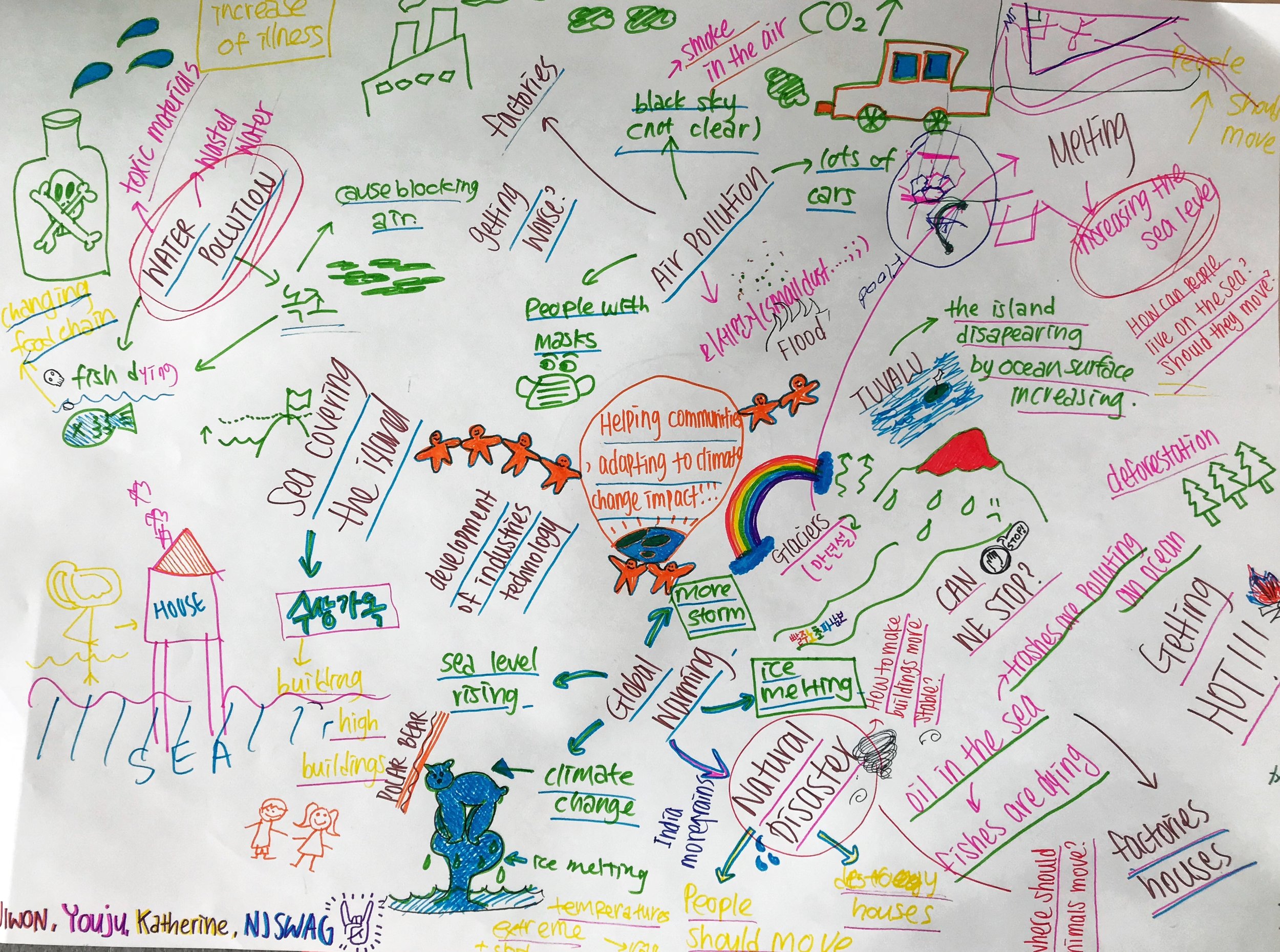
Over four days in February, the Grade 10s participated in a biomimicry design challenge through an Inter-Disciplinary Unit of inquiry (IDU). Modelled on the Global Biomimicry Challenge, students used biomimicry approaches and concepts to create a nature-inspired innovation (a product, service, or system) that addresses climate change by either:
Helping communities adapt to or mitigate climate change impacts (i.e., those forecasted or already in motion), and/or
Reversing or slowing climate change itself (e.g., by removing excess greenhouse gases from the atmosphere).
Starting first with research, each team worked to narrow their focus and develop a research question that would guide them. A trip to the Yeomiji Botanical Gardens in Jungmun was valuable as the students could see first hand forms in nature that would inspire them in their designs. Using a taxonomy of biomimicry as a guide, students researched the various plants in the different biomes looking for possibly inspiration to their design challenge. After identifying strategies in nature that might be useful to solving their design challenge, students translated these biological strategies into design strategies. Examples of biological inspiration were: veins in the ears of a rabbit for transporting heat because pipes filled with water regulate temperature in buildings; geothermal heat was identified as a possible energy source for an air purification system; and jellyfish were used to inspire floating water filtrations systems.
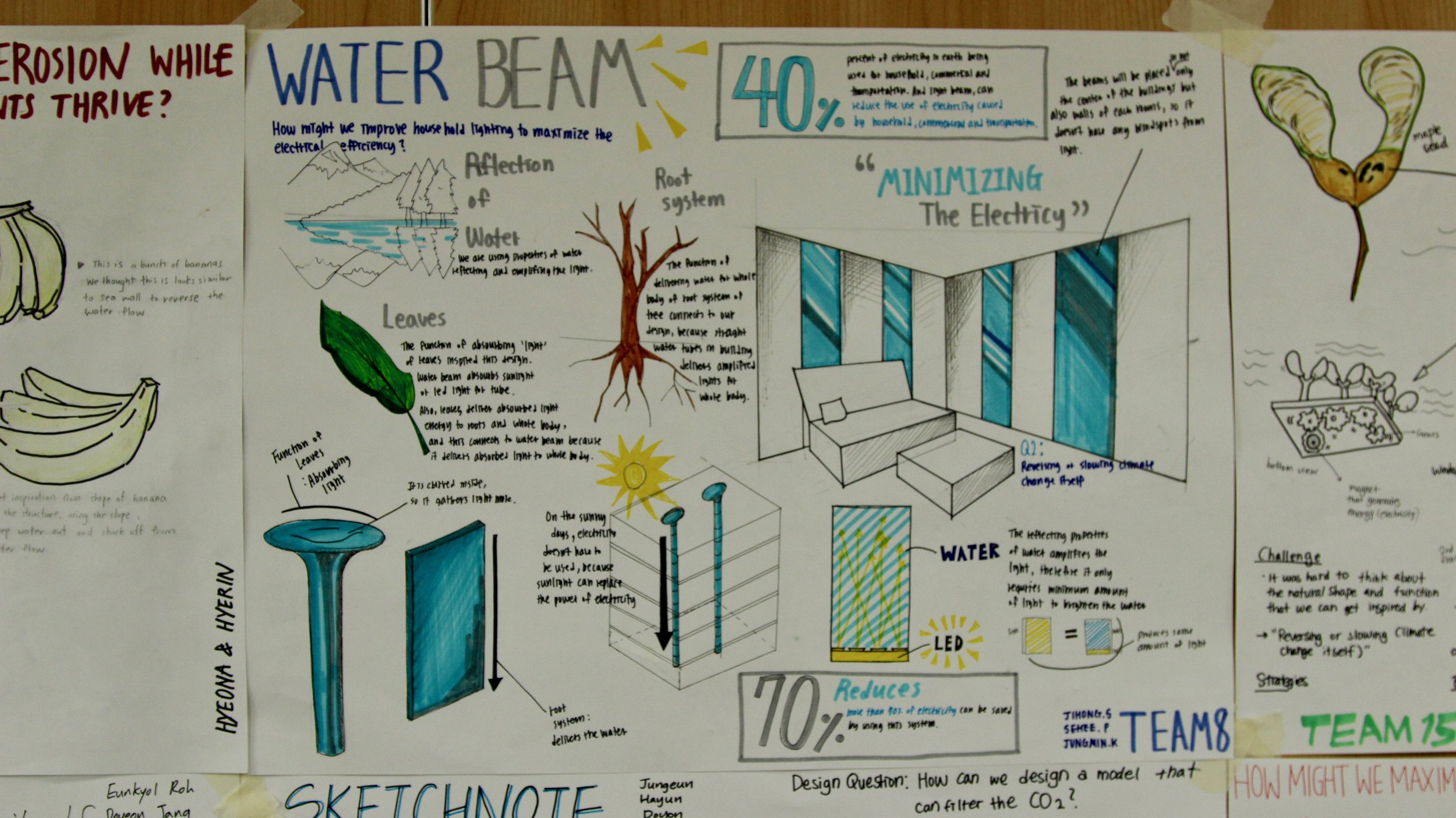
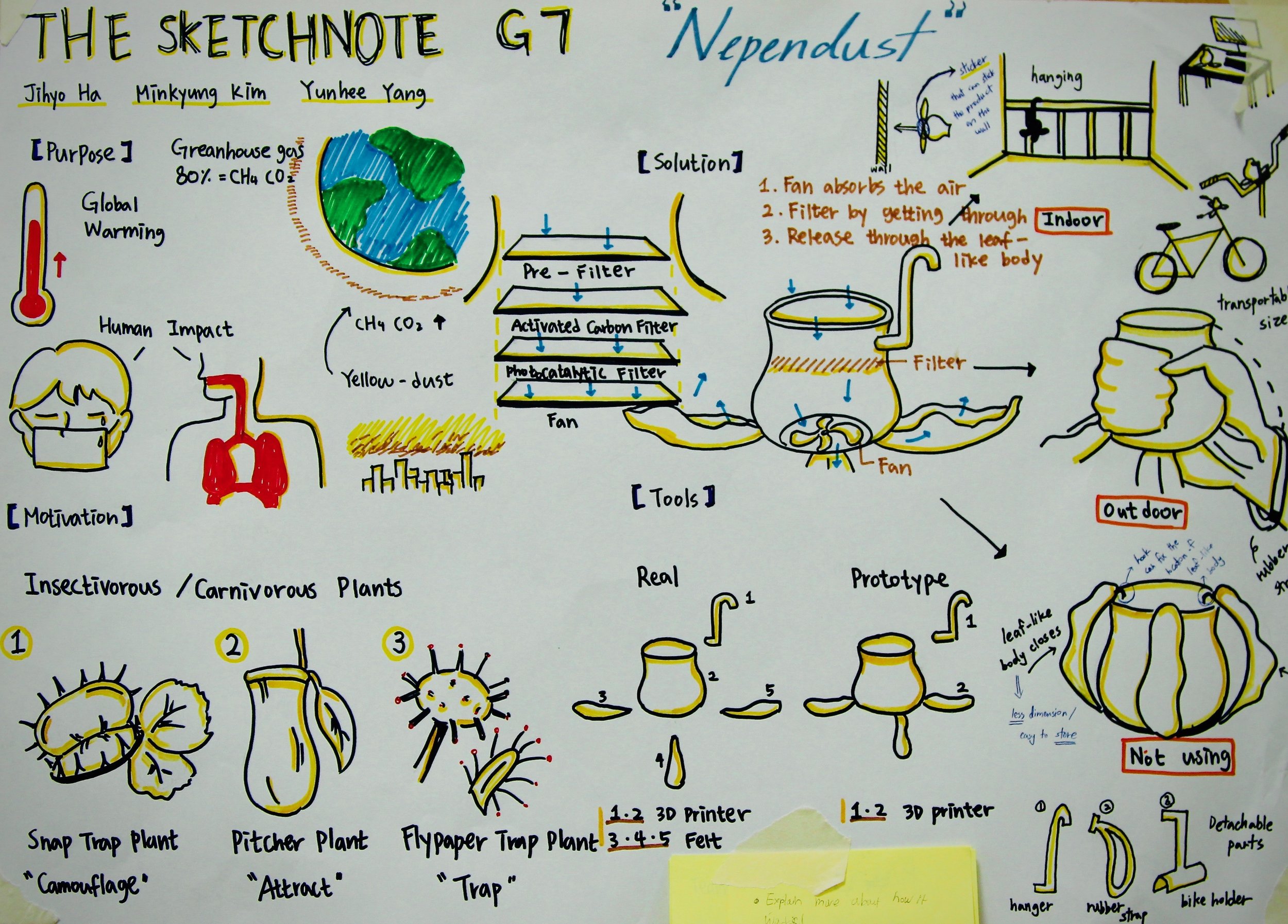
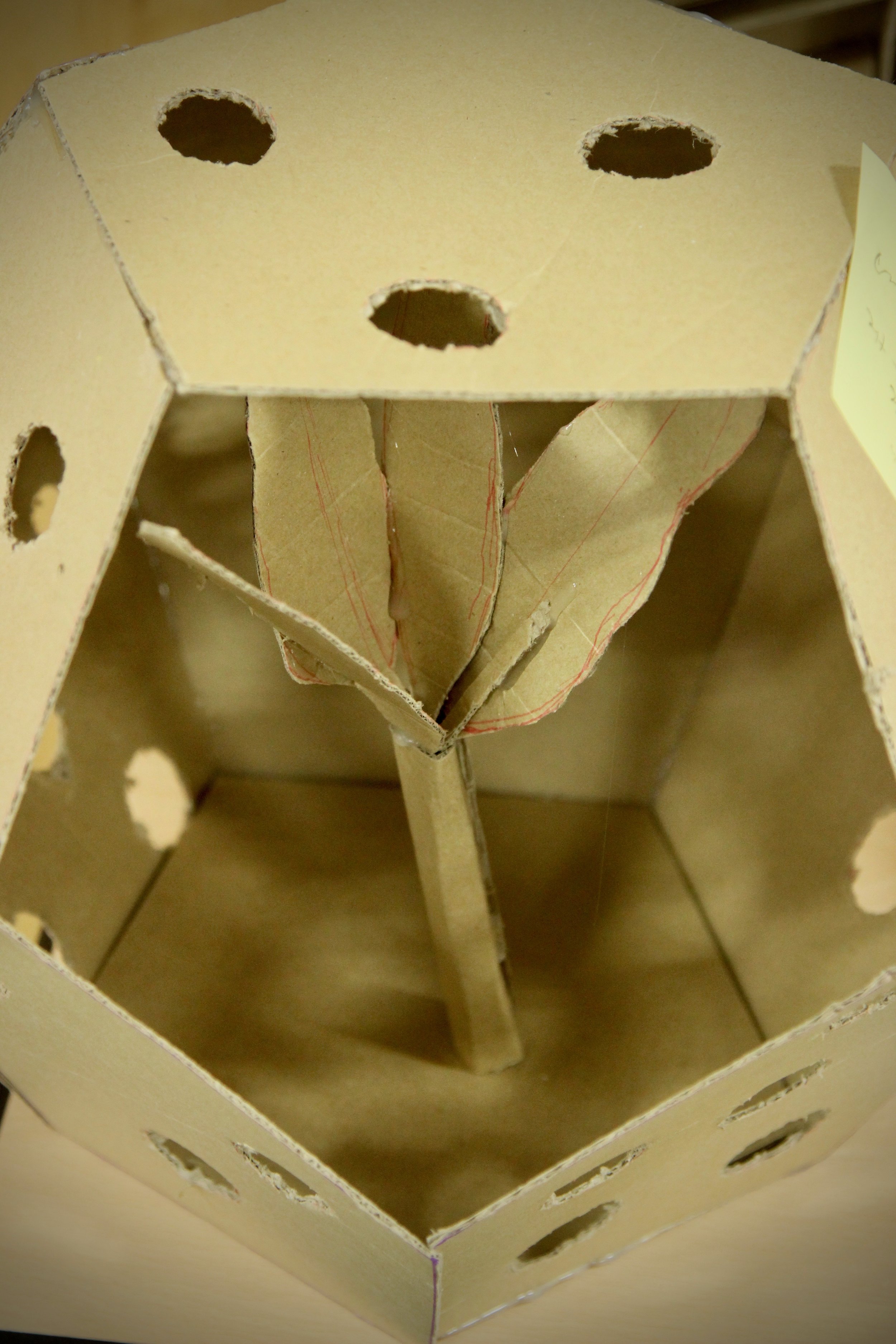
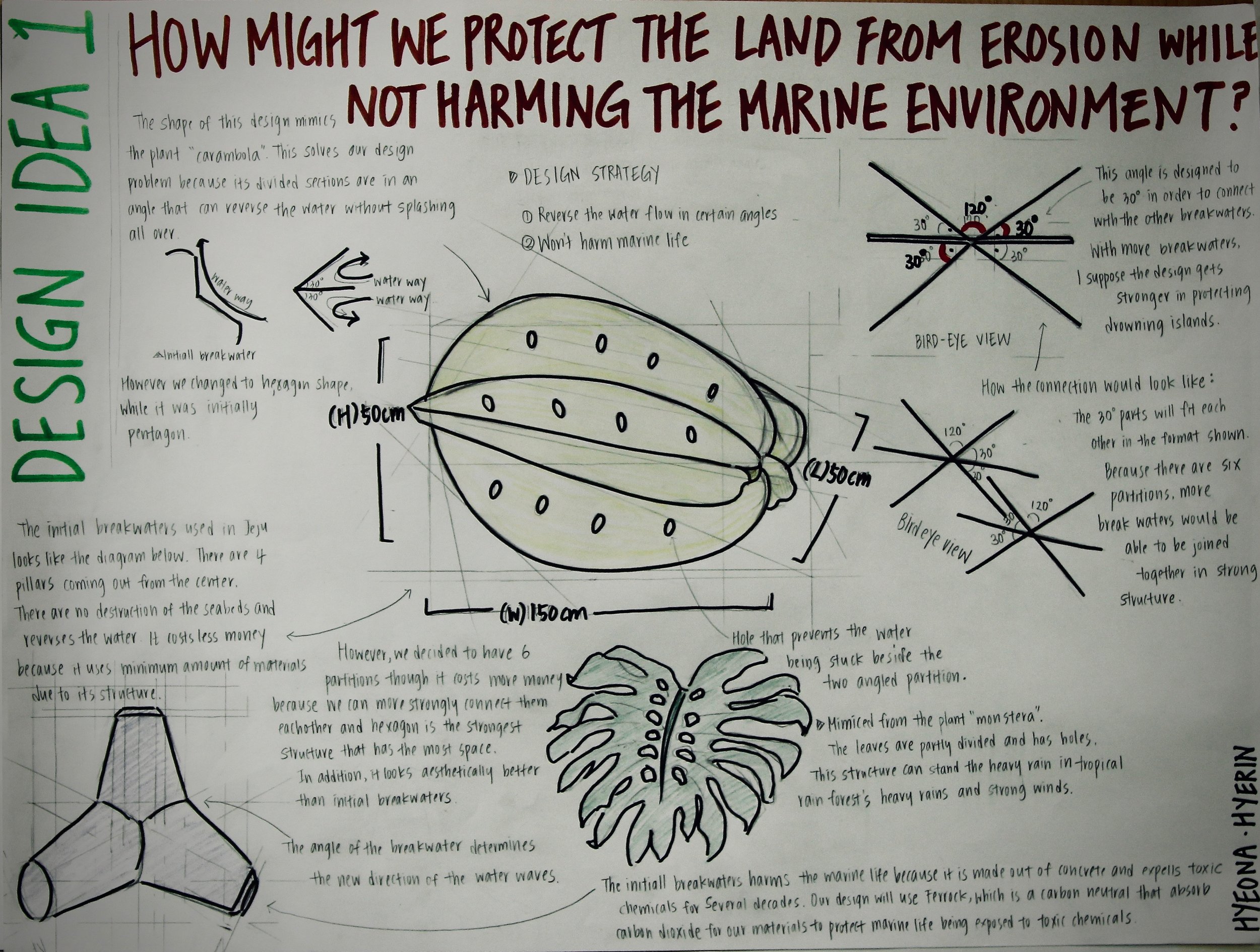
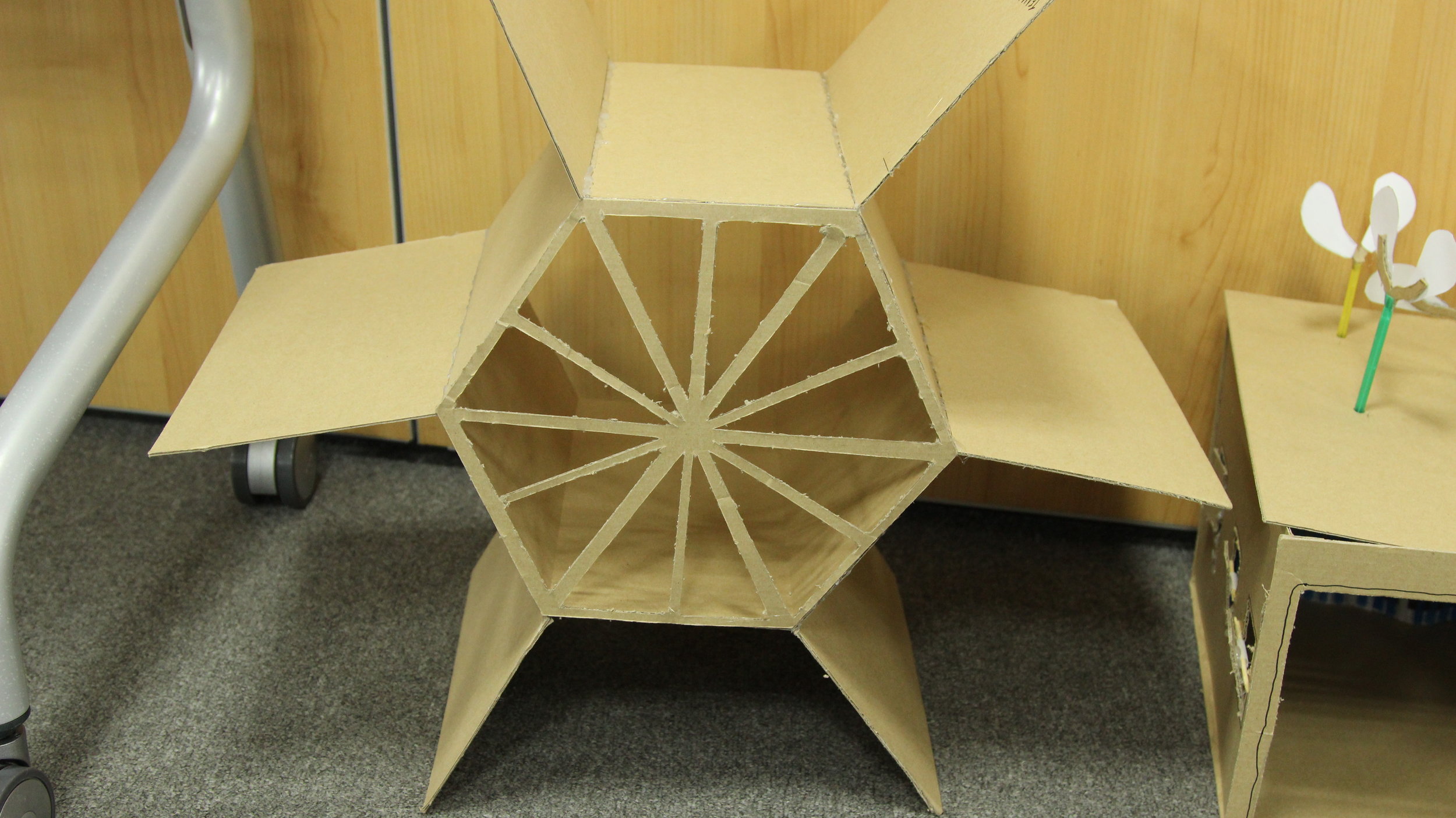
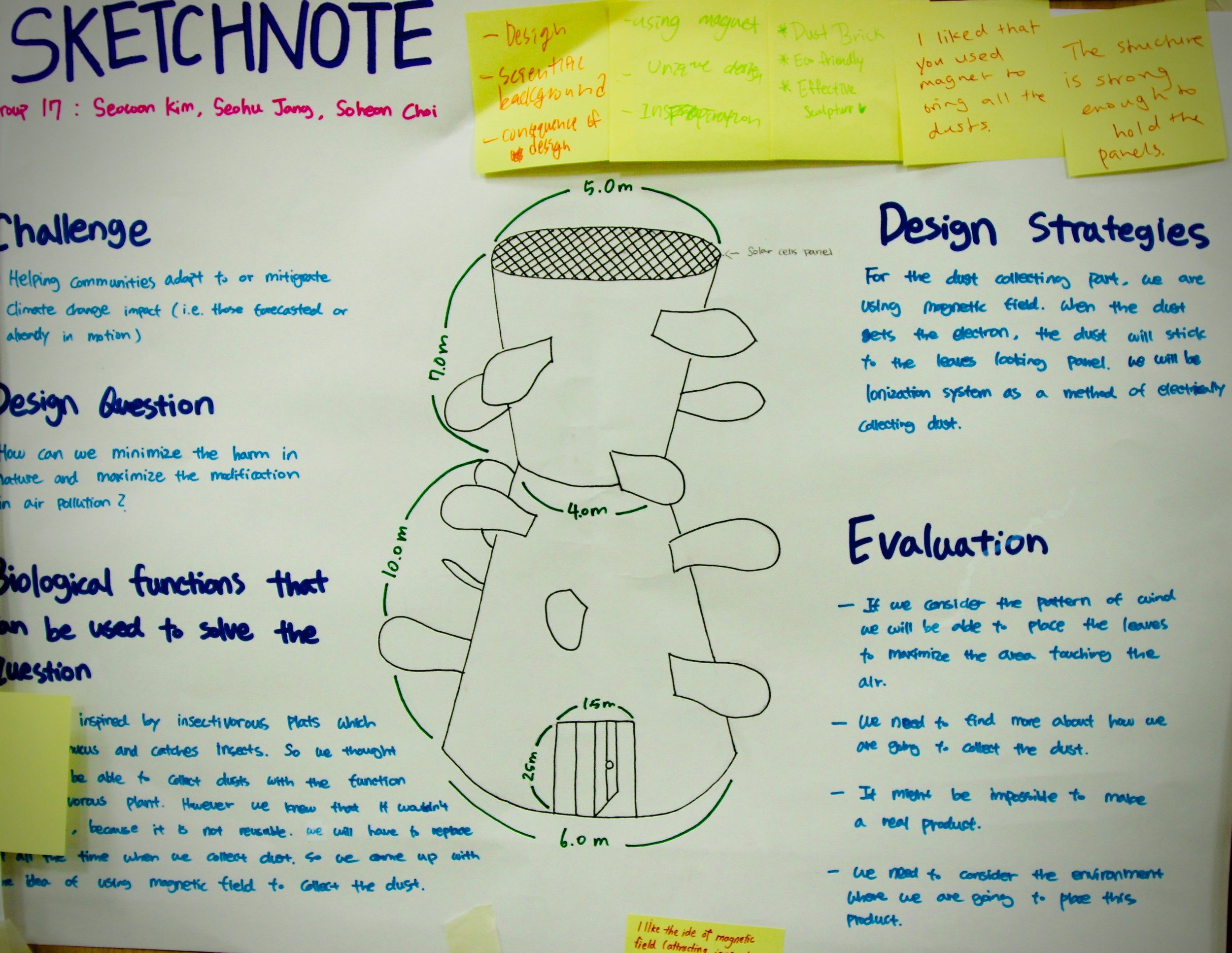
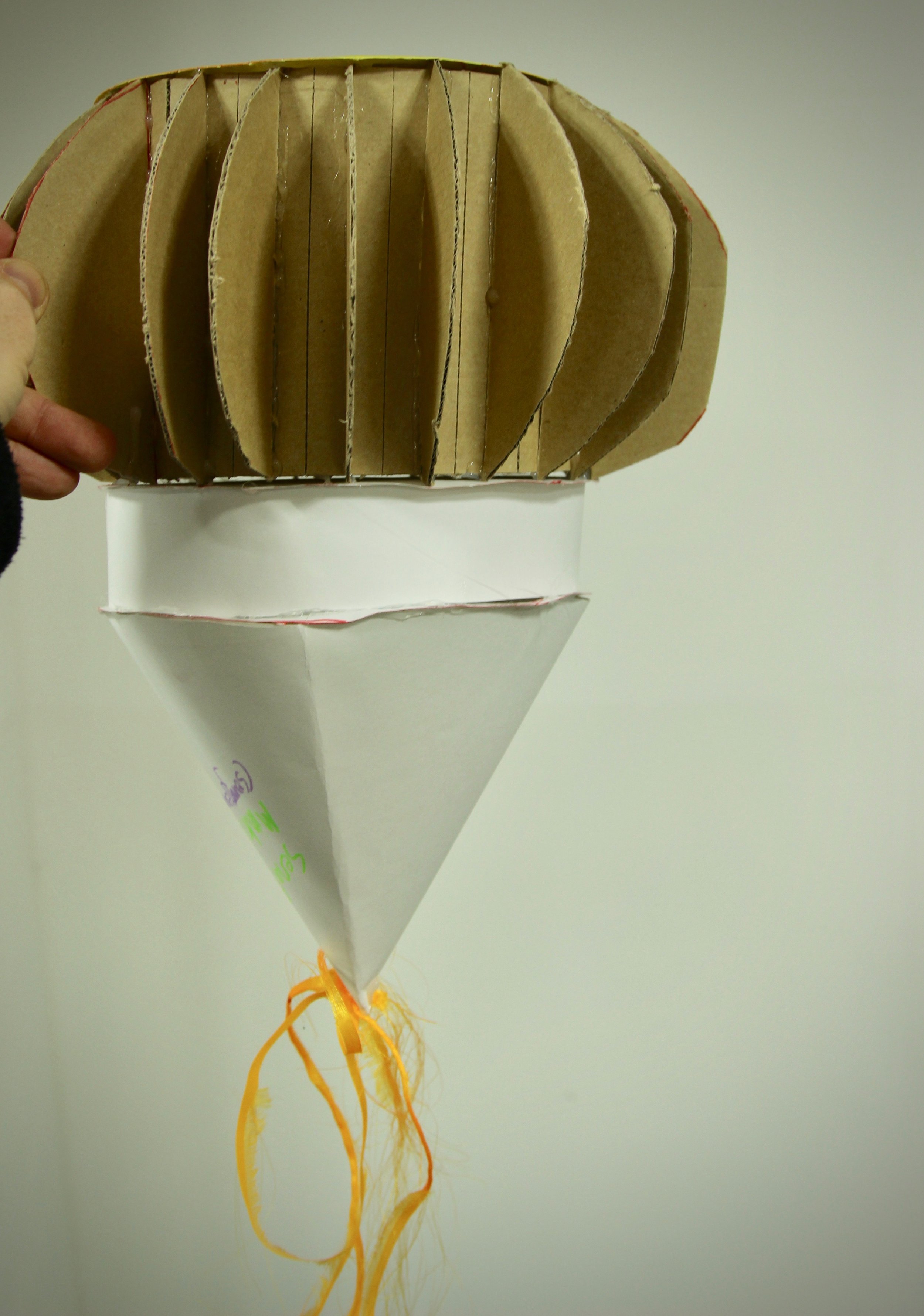
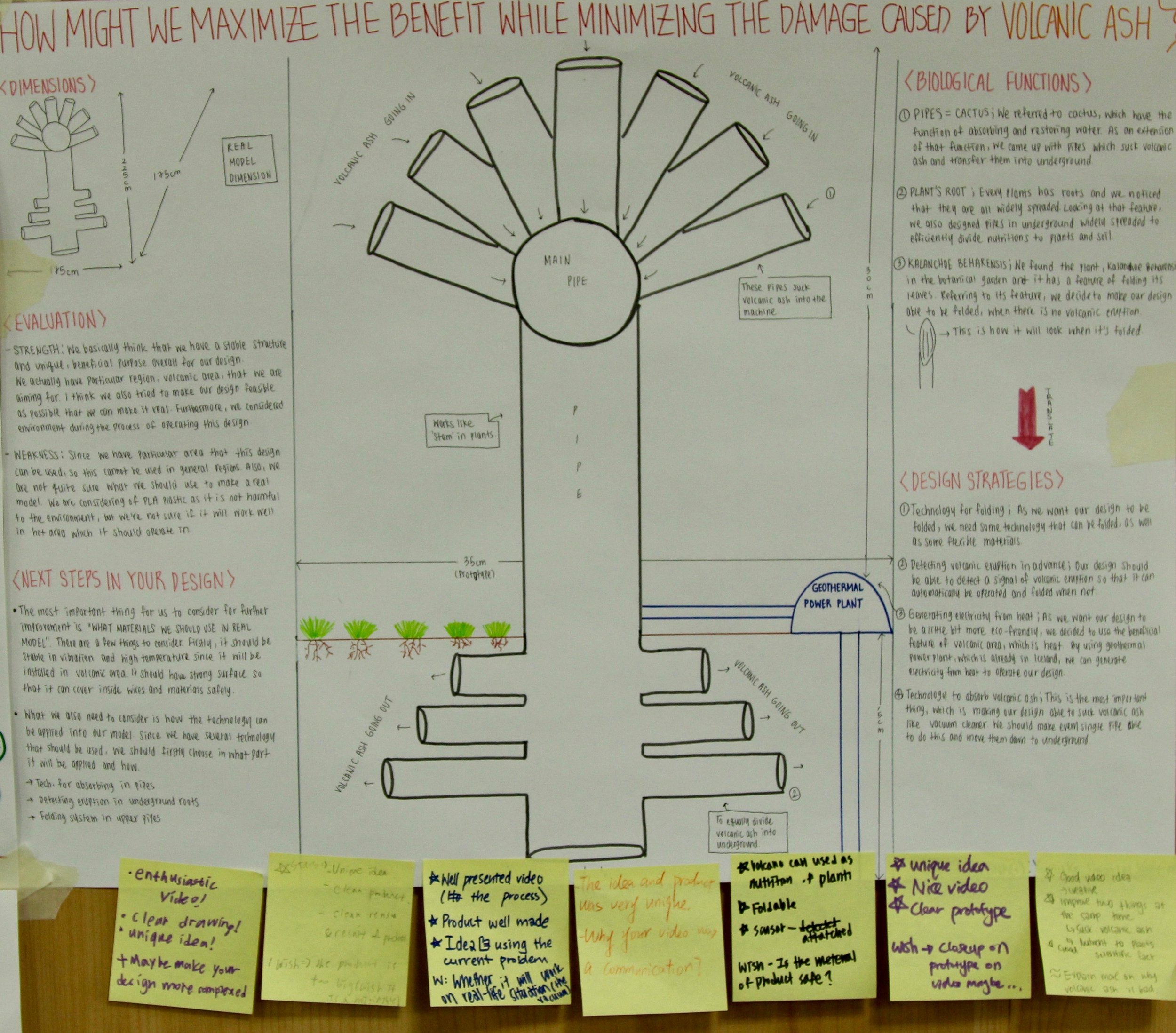
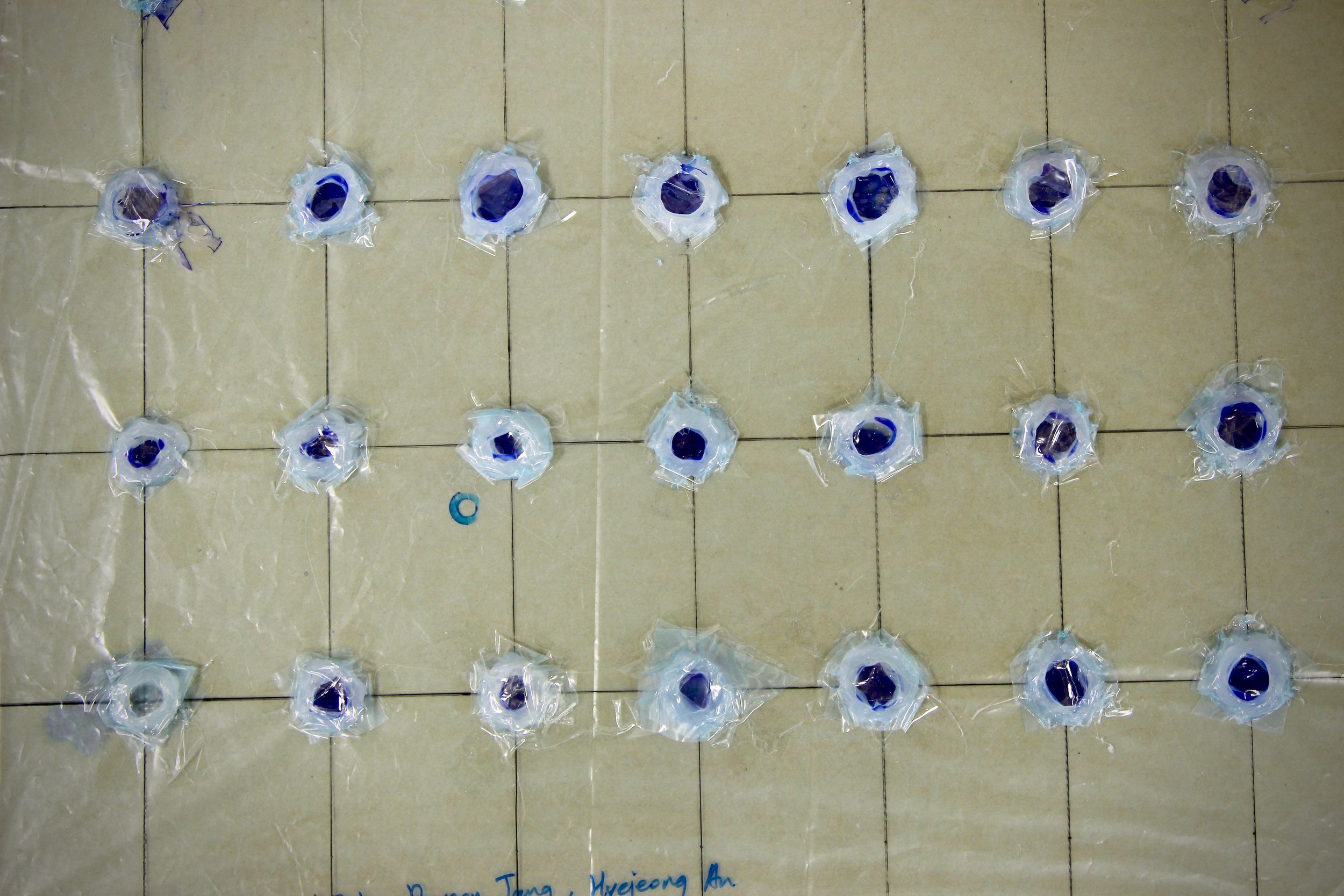
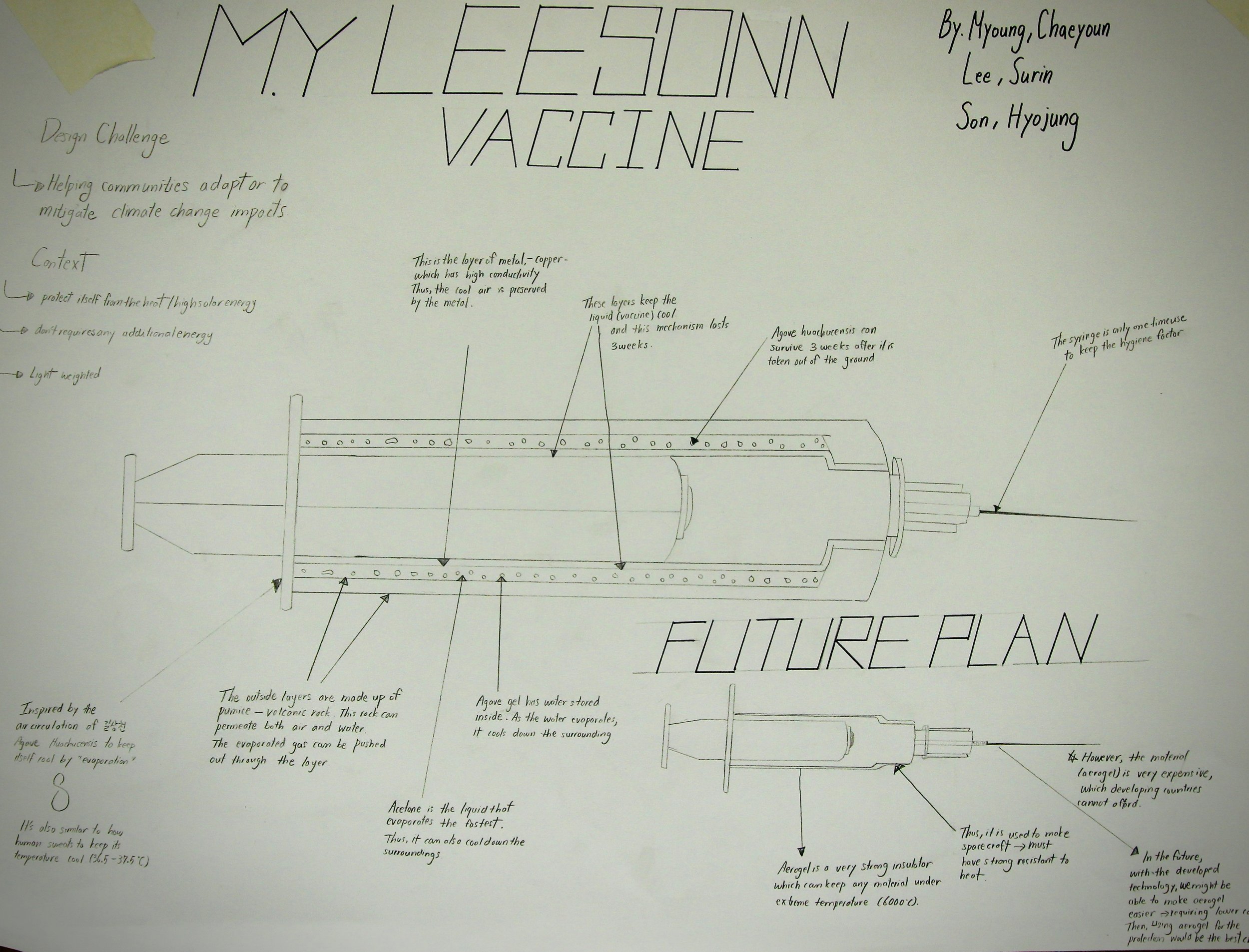
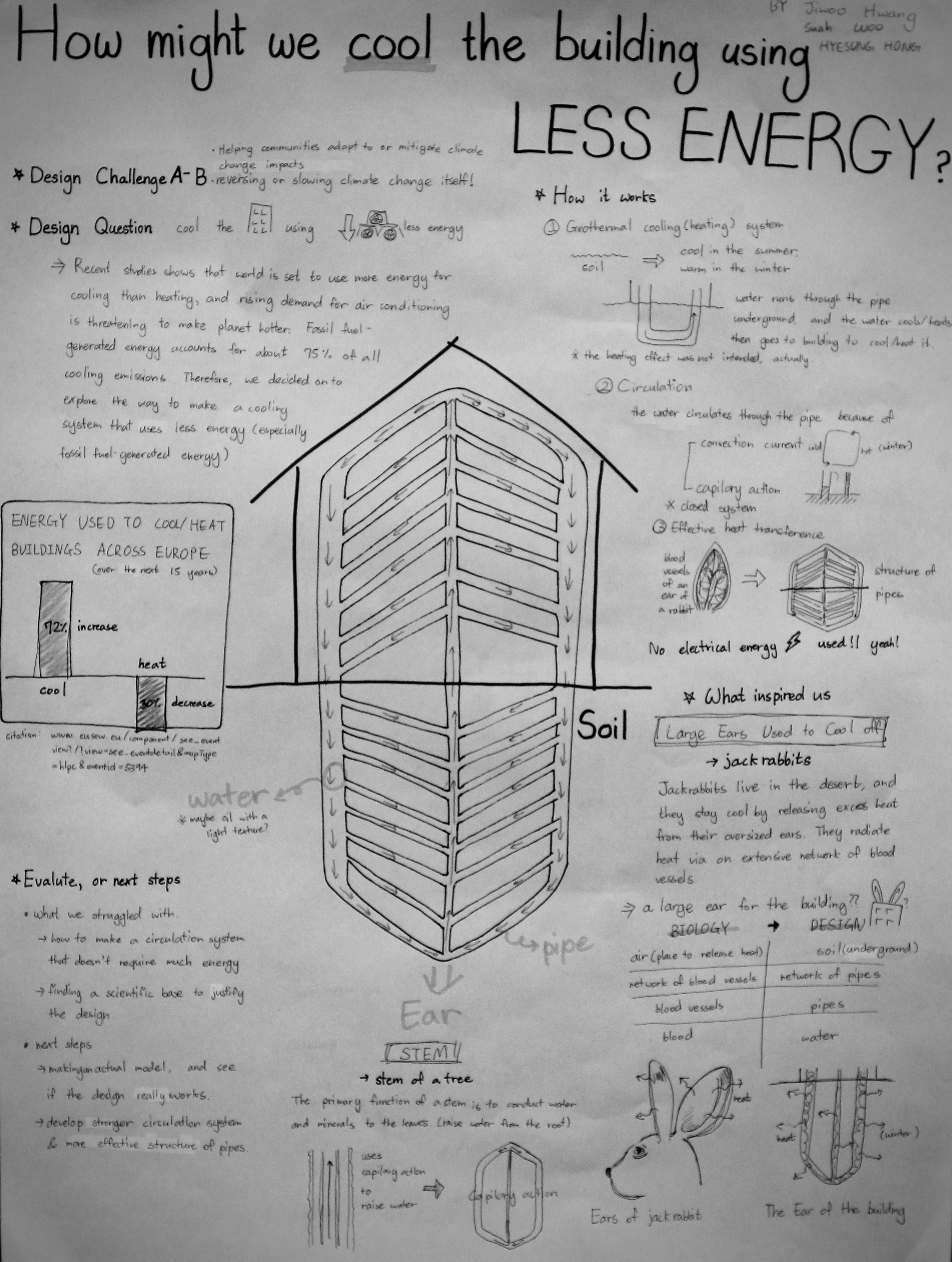
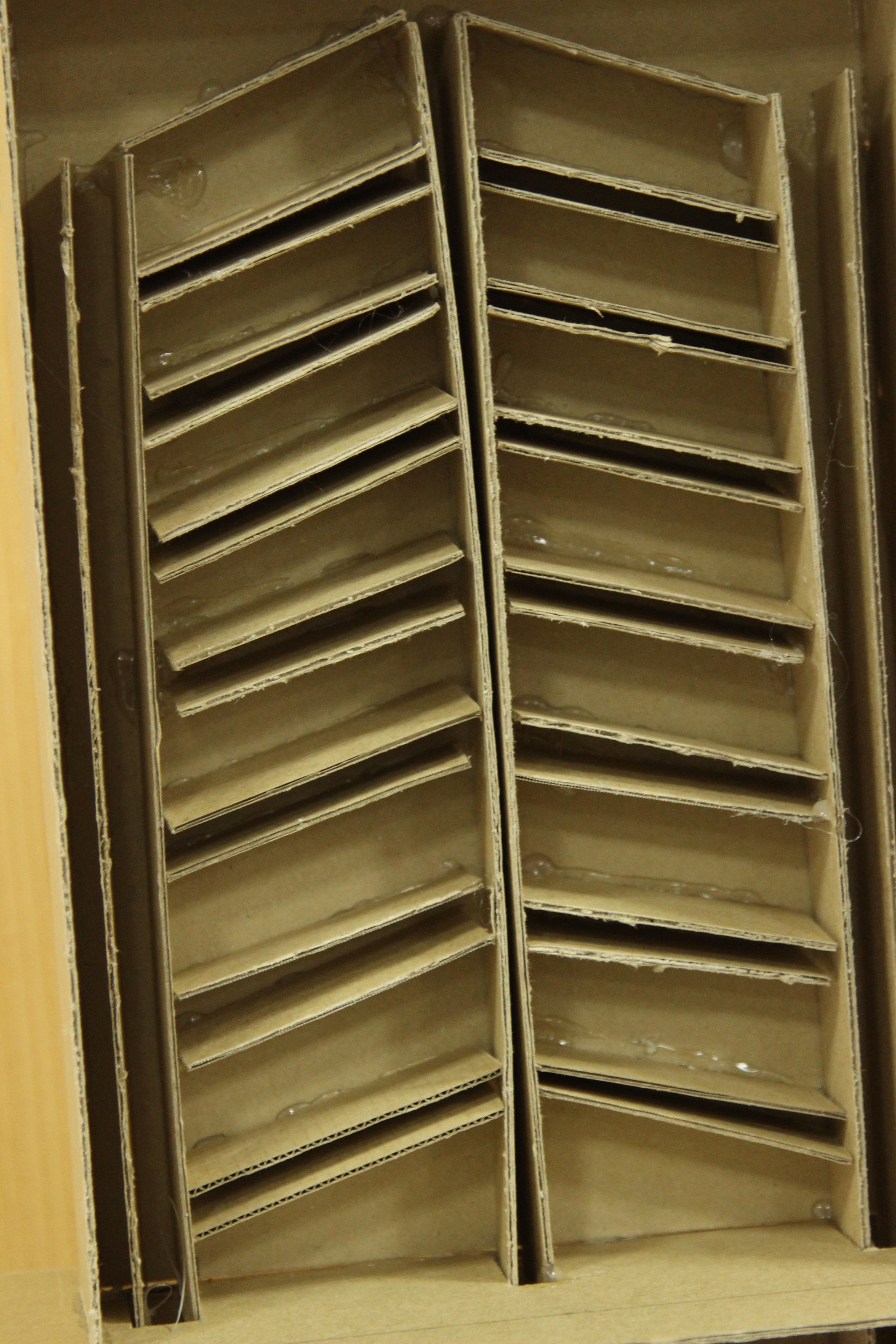
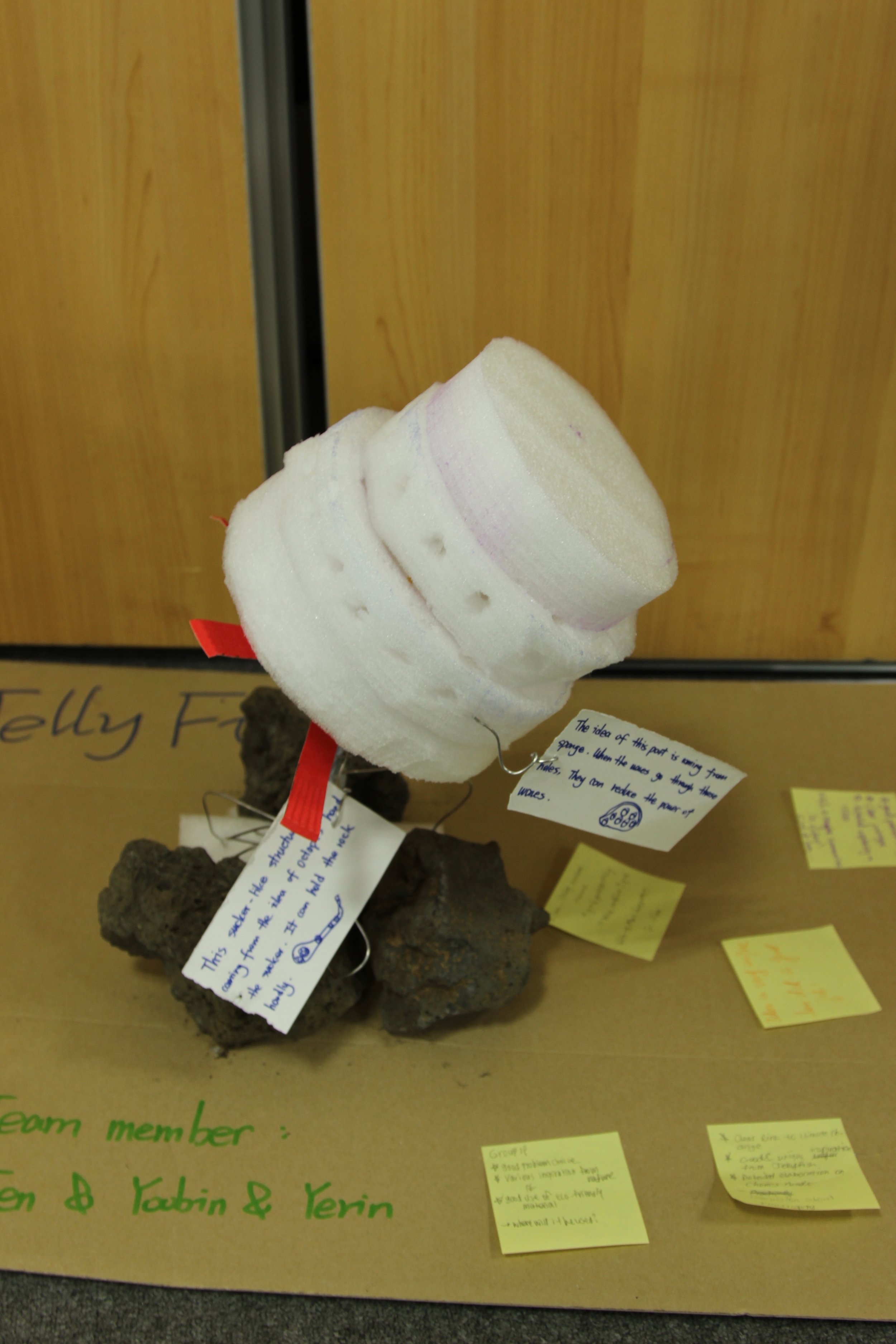
Designers are collaborators. In their working teams, students collaborated, negotiated, and shared ideas and inspiration. The culmination of the IDU was the sharing and discussion of their ideas. Each team had taken a risk in exploring possible solutions. We closed our day with a celebration of inquiry and all the wonderful directions it can take us.
We are excited about the new possibilities this interdisciplinary unit has opened up for our students. Biomimicry has strong connections to Design and Science, and highlights how the two disciplines can work together to combat the issues that arise from climate change. But most importantly, this IDU showed our girls the power of inquiring together, taking risks, and using knowledge and skills to make the world a better place.
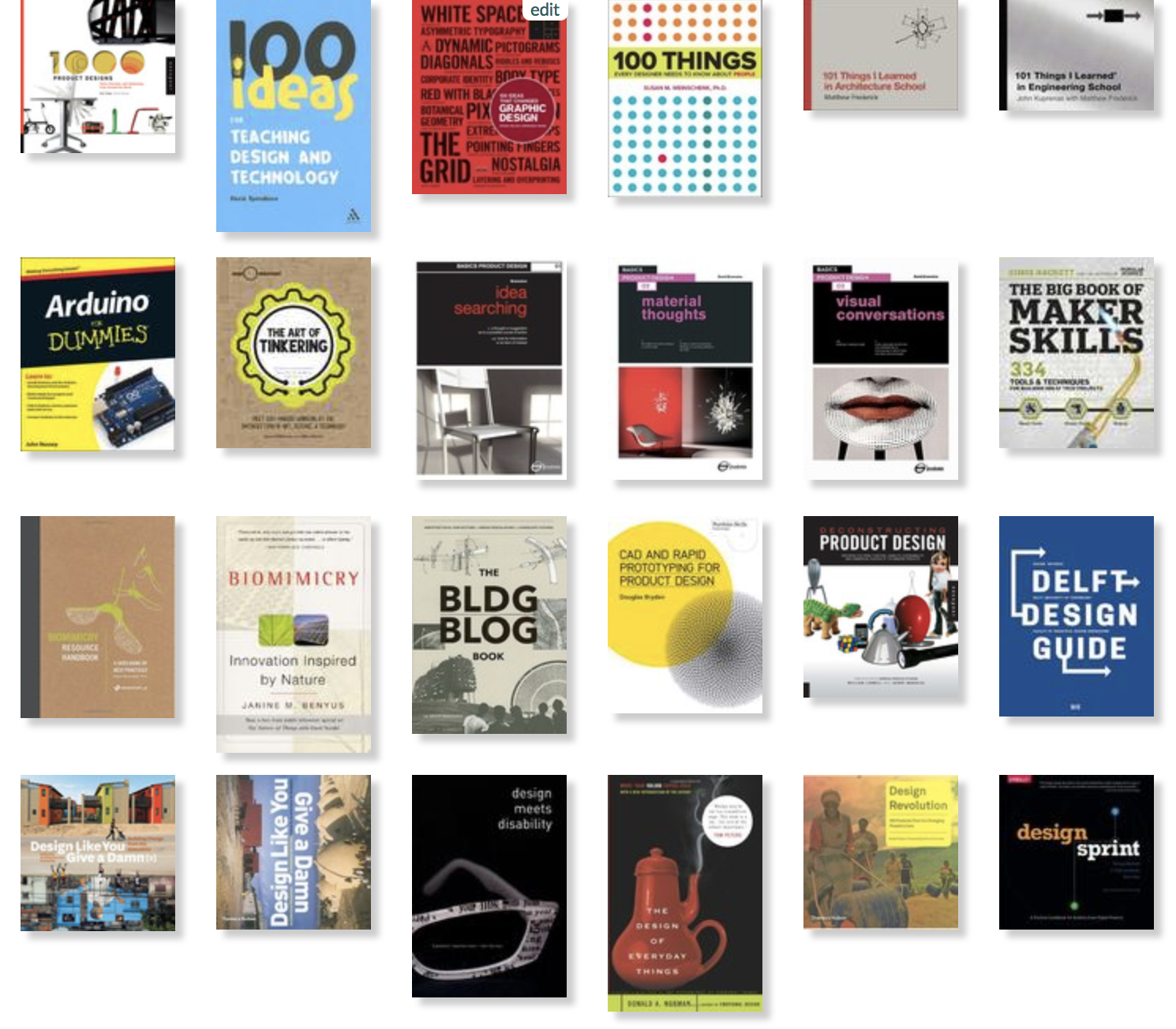
Design Inquiry Bookshelf
We've started to build a Design Library to support our students and teachers in their inquiry. This is part of a greater literacy initiative at our school. Our goal is to encourage students to read in order to develop their understanding of a topic. Plus, books offer a different mode of accessing information than a computer screen.
There's lots of research highlighting the benefits of a classroom library, and a design classroom should be no exception. In our case, having the resources close at hand is essential for students supporting their inquiry.
We've organized our library according to our needs. The books are sorted according to themes that match the major steps of the design inquiry cycle (such as research, materials, and processes), as well as significant topics (sustainability, human factors, and user-centered design). It's our hope that the library comes to play a significant part in our students' inquiry.
Fast build prototypes of a LED microlight
Fast Builds: De-emphasizing the object, Emphasizing communication
To stimulate interest in our latest grade nine unit on sustainable lighting, we began with a "fast build" - a quick, adventurous exploration of a design possibility. The ability to explore an idea through quickly building prototypes is an essential skill for designers. What we have discovered as we have used this tool more and more is that a fast build is as much about communication as it is about making something quickly.
The Fast Build Protocol in our studio has evolved to emphasize the following:
- Exploring a design idea by taking creative risks
- Using a low-fidelity prototype that can be put in the user's hands
- Prioritizing communication of a concept
The fast builds are fun activities where students can take risks, build quickly, focus on communicating their thinking, and generate possible avenues for design exploration. Its amazing to see how quickly ideas are generated and explored. In this particular activity, students worked to a 20:15:10 ratio:
- 20 minutes to build a low-fidelity prototype using a limited range of materials (in this case, an LED light, CR2032 battery, cardboard, and tape)
- 15 minutes to document and complete a parts-purposes-complexities thinking routine
- 10 minutes in groups to give feedback and discuss possible design directions


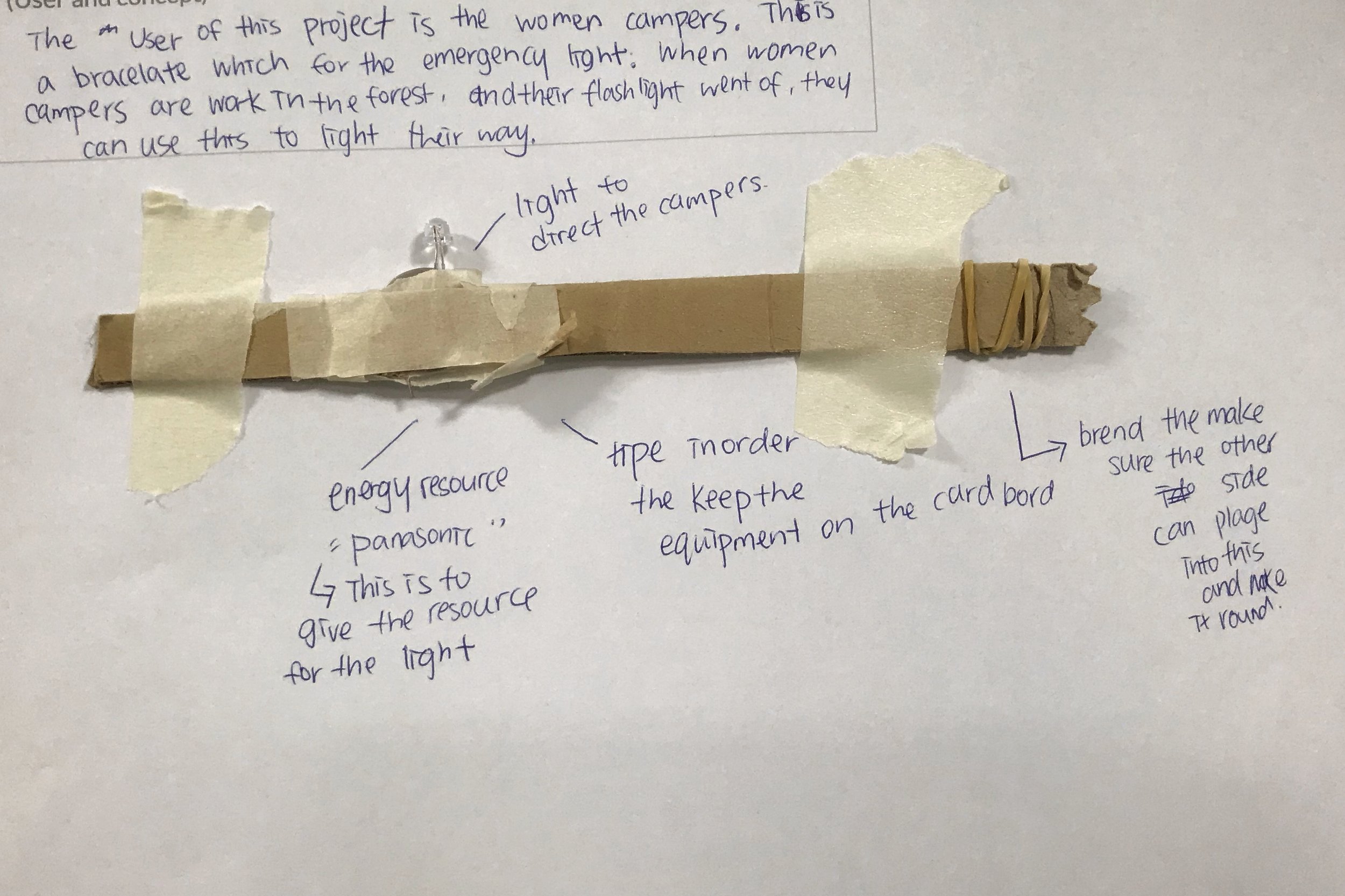


Fast builds are opportunities for the students to practice communicating their thinking in a variety of forms. Students communicate their idea through a prototype that can be put in another person's hand. The parts-purposes-complexities thinking routine provides students with a written outlet of communicating their idea. Finally, the discussion and feedback sessions give them a chance to discuss in depth the ideas and listen to feedback from peers about possible directions they can take their design.
This emphasis on working quickly de-emphasizes the preciousness of the object--Students see the fast build prototype as a tool for communicating their idea in order to further their inquiry.
Exploring and extrapolating form
In this unit, students are investigating open source design and flat pack technology using CAD CAM technologies. At the beginning of the unit, we wanted to develop an understanding of what a flat pack design is, and how designers develop products using innovative methods for assembly. Developing a critical eye for how a product has been manufactured is an essential skill for a designer. Examining the individual components of a product and how they combine to create the complete form, can provide opportunities for innovation and exploration.


Our first goal was to look at different designs and consider their manufacture. Using a parts-purposes-complexities thinking routine, students explored different products. The challenge, though, was to extrapolate from a single photograph the components of the design. They did this through discussion, brainstorming, and sketching. Lots of debate, speculation, and sketching took place at this stage as they worked together to understand the design from limited information. The focus shifted to looking carefully at the product and considering how the various pieces were assembled, how joints were made, and elements of scale and proportion.
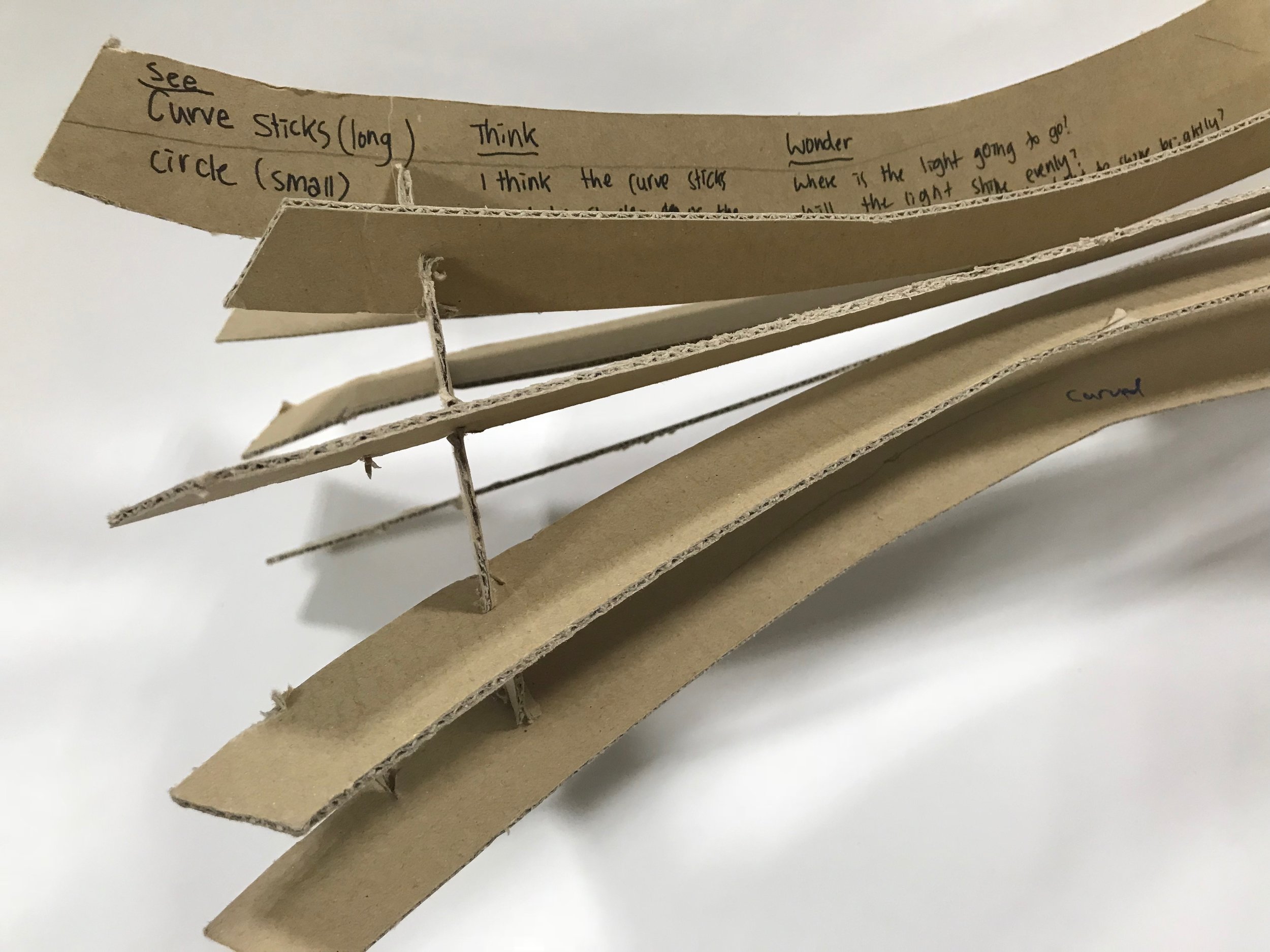
Next, the designs were transferred to corrugated board with the goal of optimizing the use of a single sheet of material. Here the focus had shifted to figuring out ways create the parts. After cutting, they assembled the parts for peer critique.

At the critiquing stage, the focus was on looking at how the design was assembled, and how it could be improved or modified. Using a see-think-wonder, students wrote feedback on the designs, making explicit reference to the different parts and components, and considering how the design was assembled. Throughout, the goal was to look critically and carefully at the assembled design, analyze its composition, and evaluate future iterations.


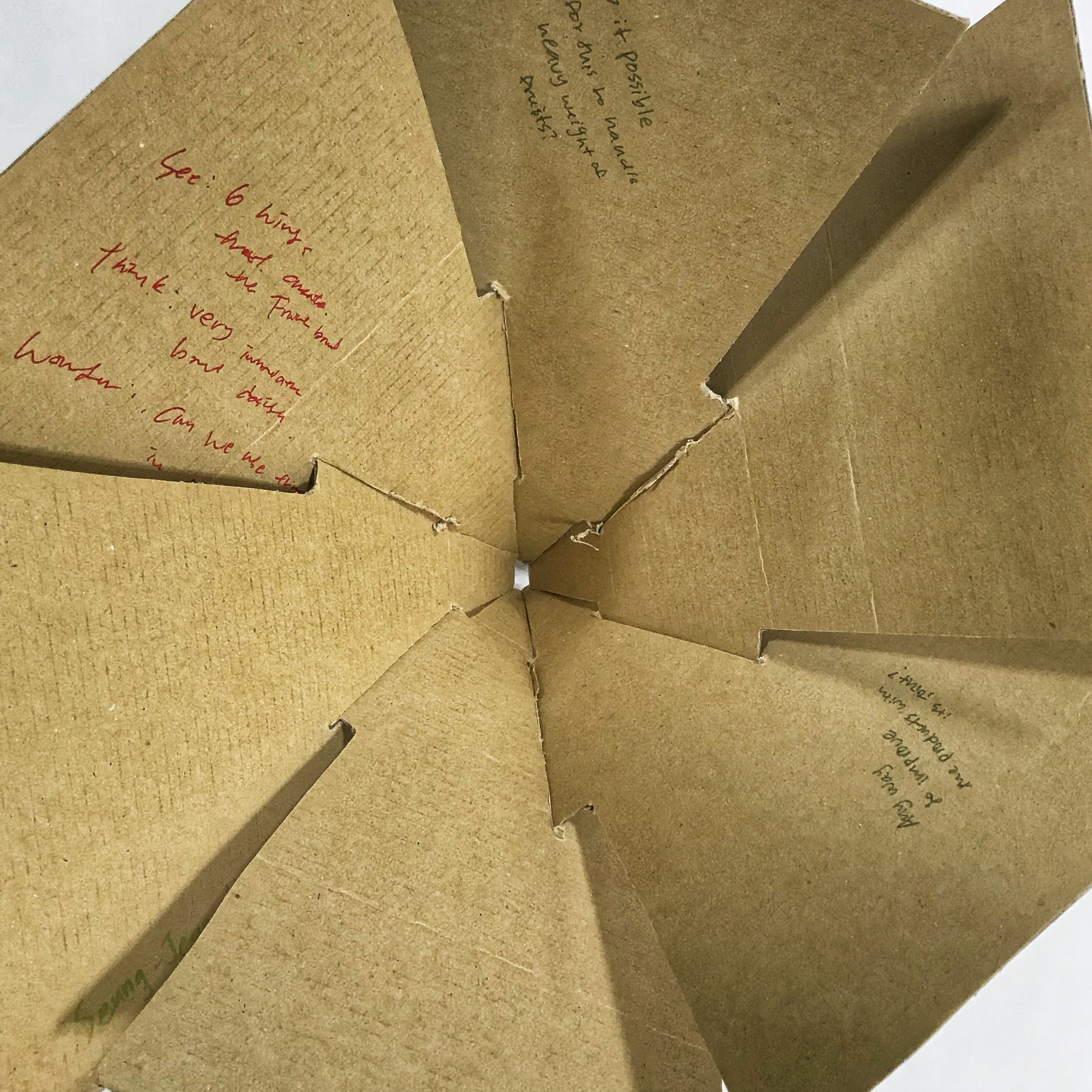

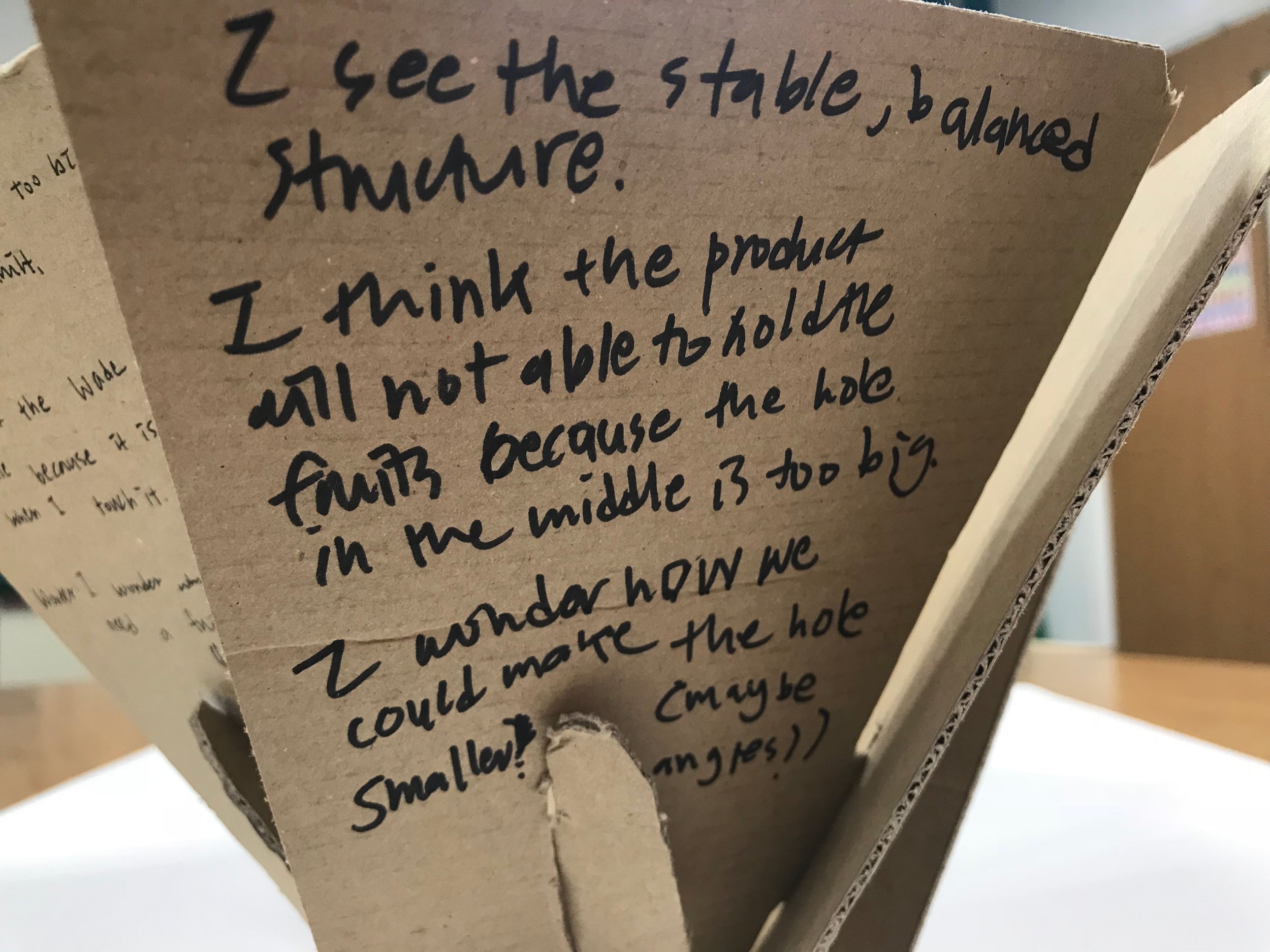


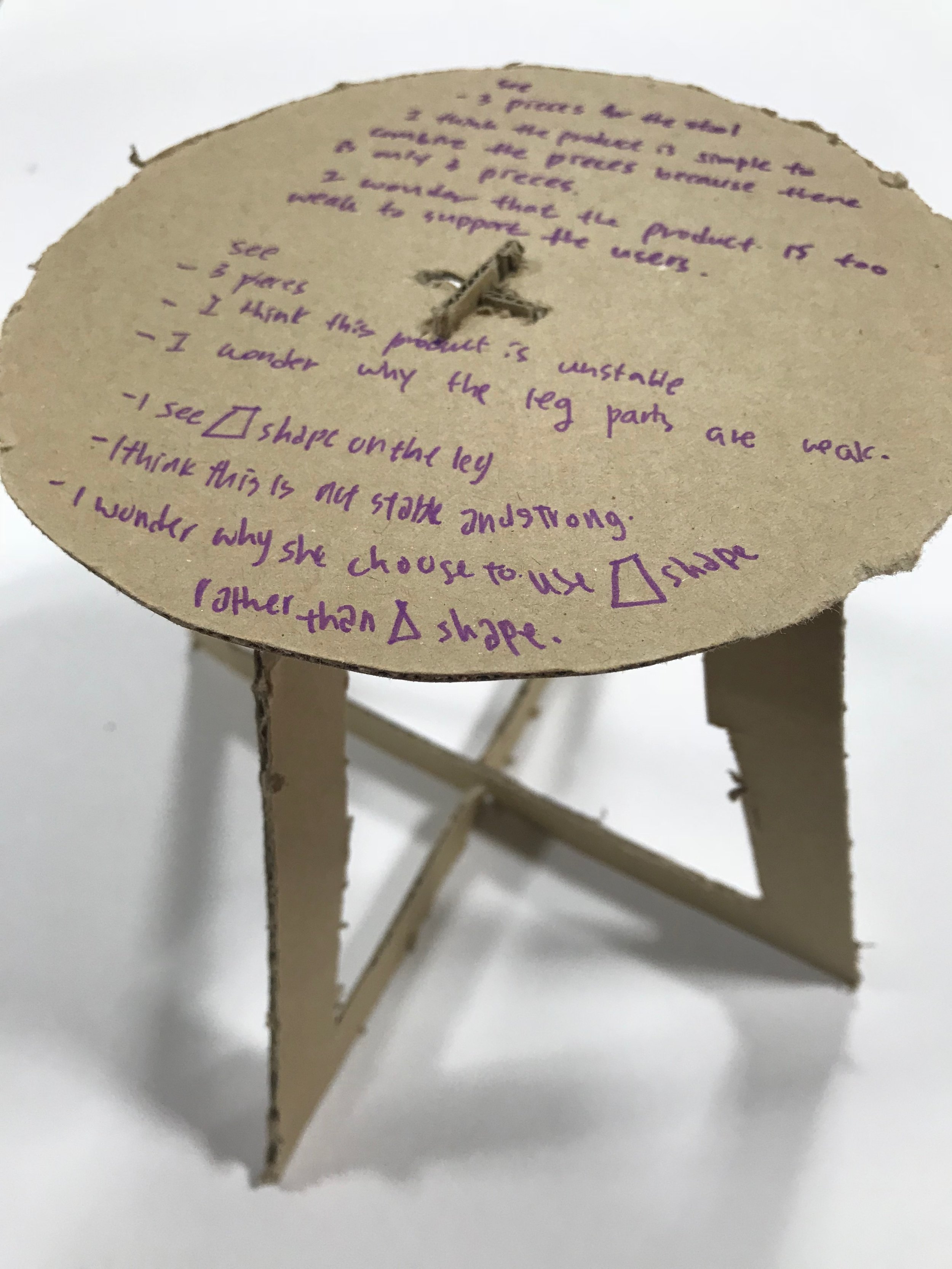

Developing an understanding of form and how pieces are connected and combined to create complex forms is an aspect of spatial visualization we have identified as an area of development in our students. Practice, application, and reflection will develop this skill and see it applied in future projects.
Playing with Solids of Constant Width
Solids of constant with are 3 dimensional forms that have a constant width regardless of their orientation. The simplest one is created from a equilateral triangle and is called a Reuleaux Triangle. Essentially, it is triangle with rounded sides.
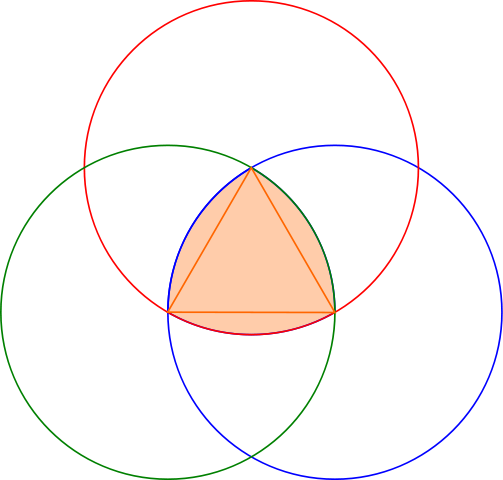
By Frédéric MICHEL - travail personnel (my own work), CC BY-SA 3.0, Link

Solid of constant width modeled and rendered in Fusion 360
For the students, this has been a fun, and brief, inquiry into how CAD software CAM technologies can be used to inquire into mathematical concepts.We've been experimenting with these in class, exploring how we could create solids with different numbers of faces, as well as the applications of this kind of shape in design. The most common example is a rolling system comprised of non-spherical forms (Solids of constant width).
Files for Downloading:
STL files of shapes
File on Autodesk A360 (you can download the Fusion 360 data files here)